



Finding the candidates, checking your calendar, sending the invites, posting the shortlist. I work across the tools you already use, and nothing reaches a candidate until you approve it.
Describe the role. SIA screens, invites and shortlists for you.
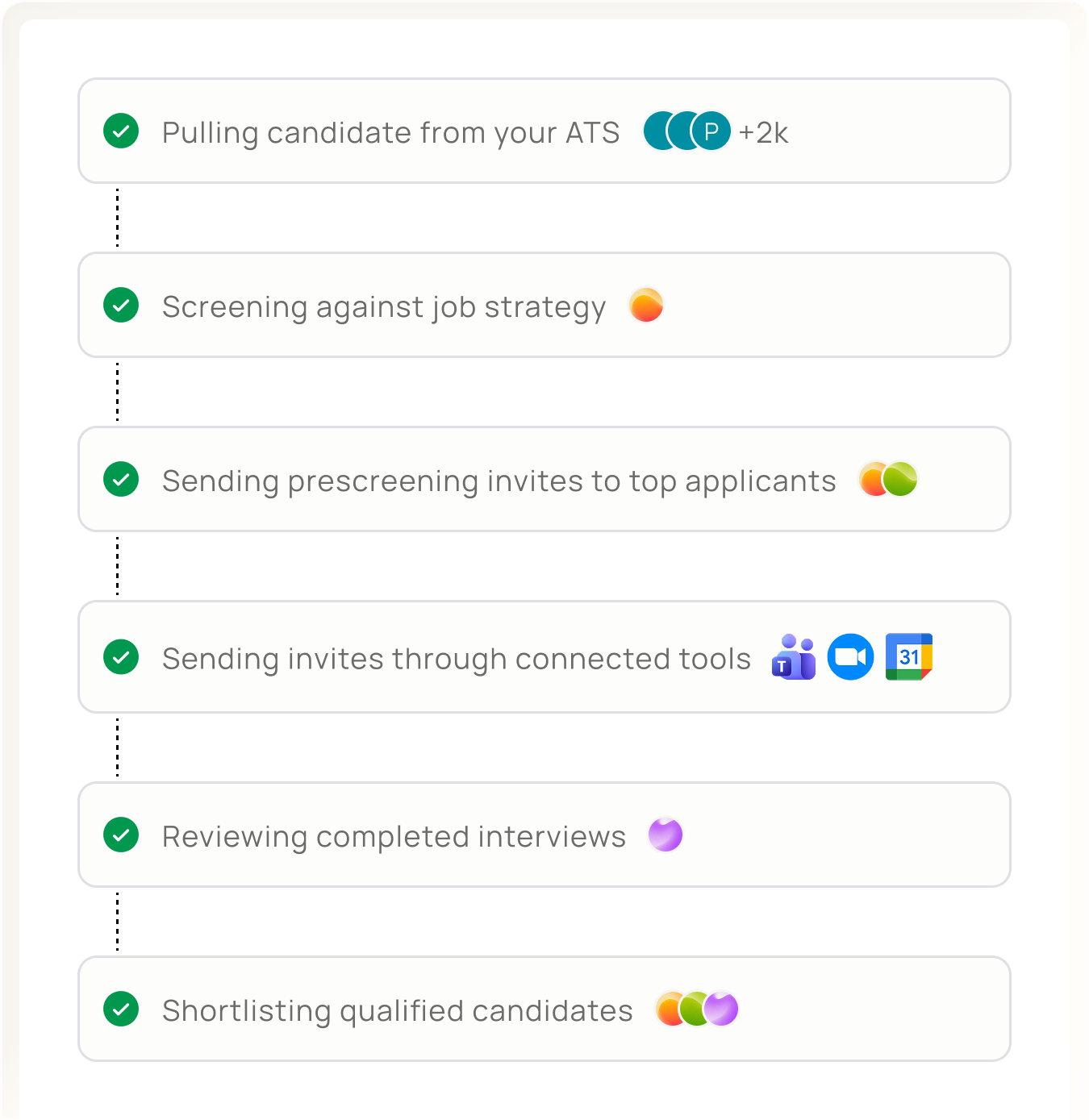
Your pool, a folder of resumes, or someone new entirely.
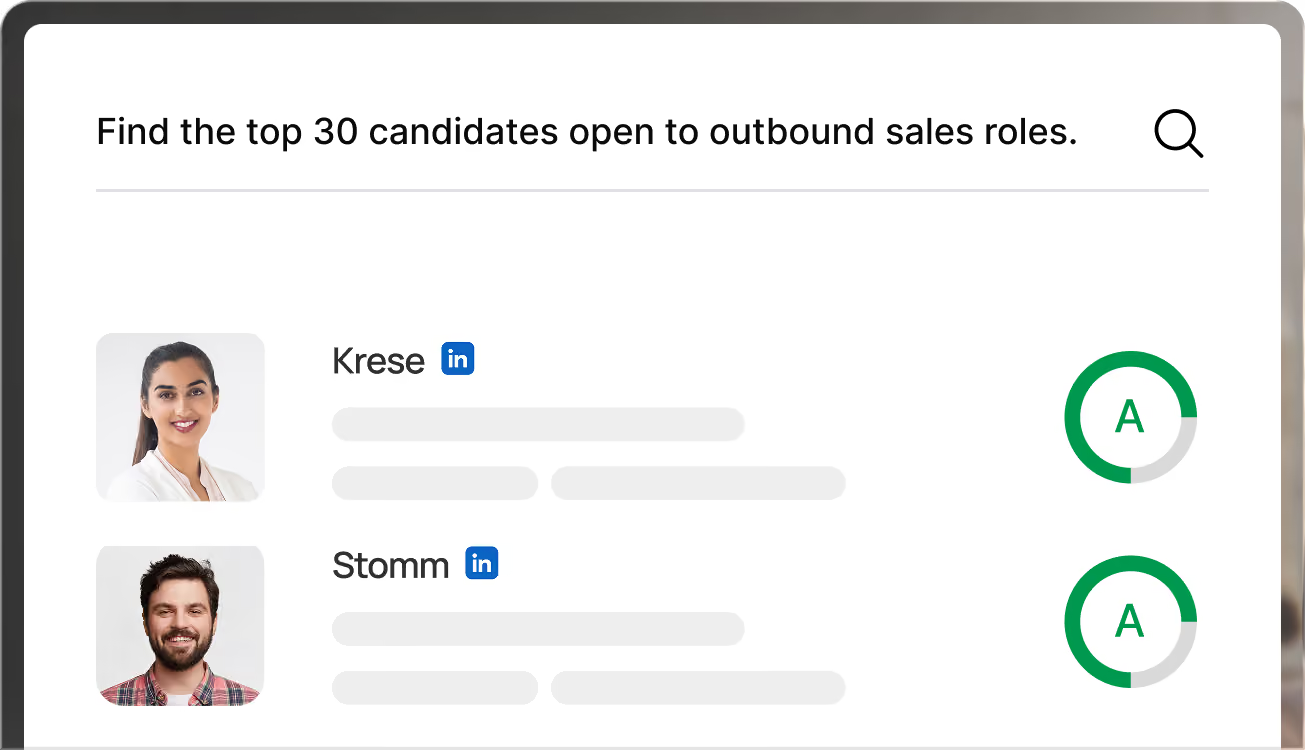
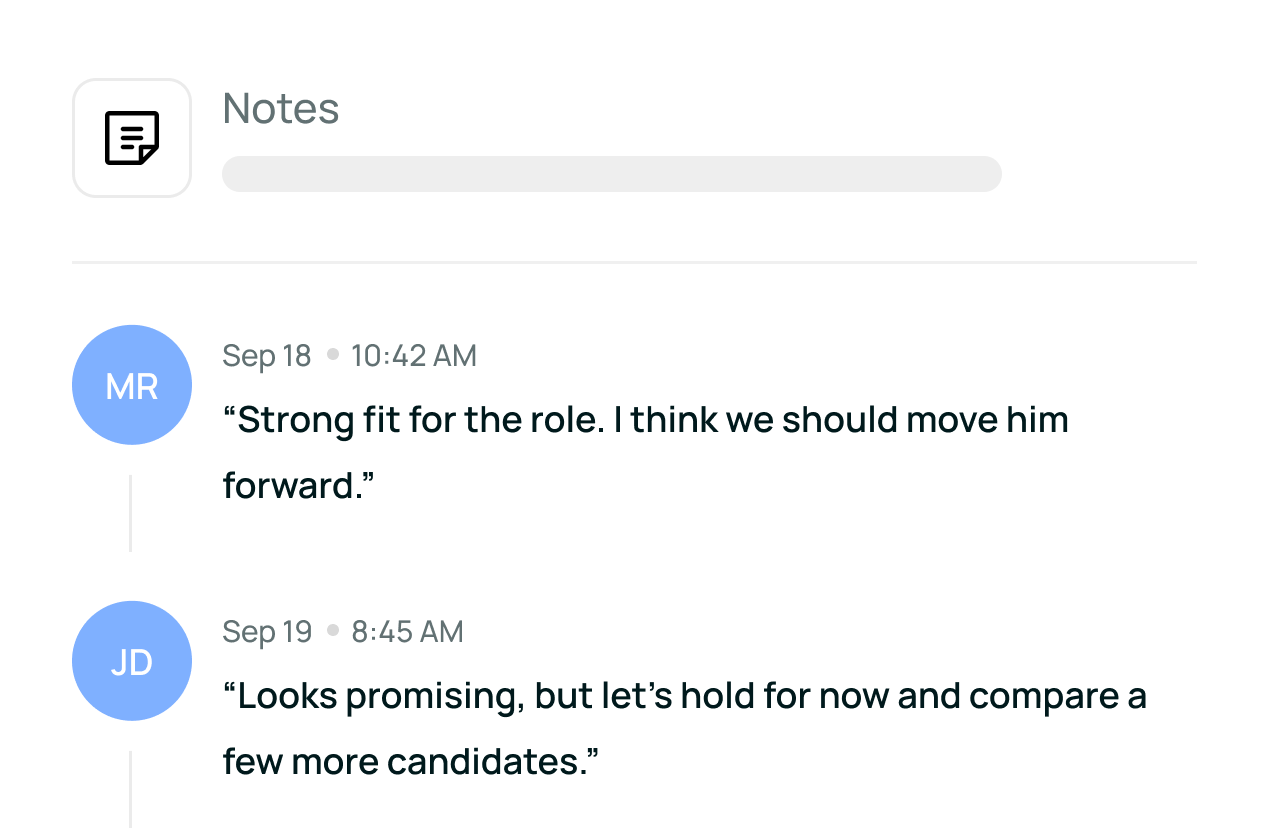
Notes, decisions and holds stay with the candidate, not scattered.
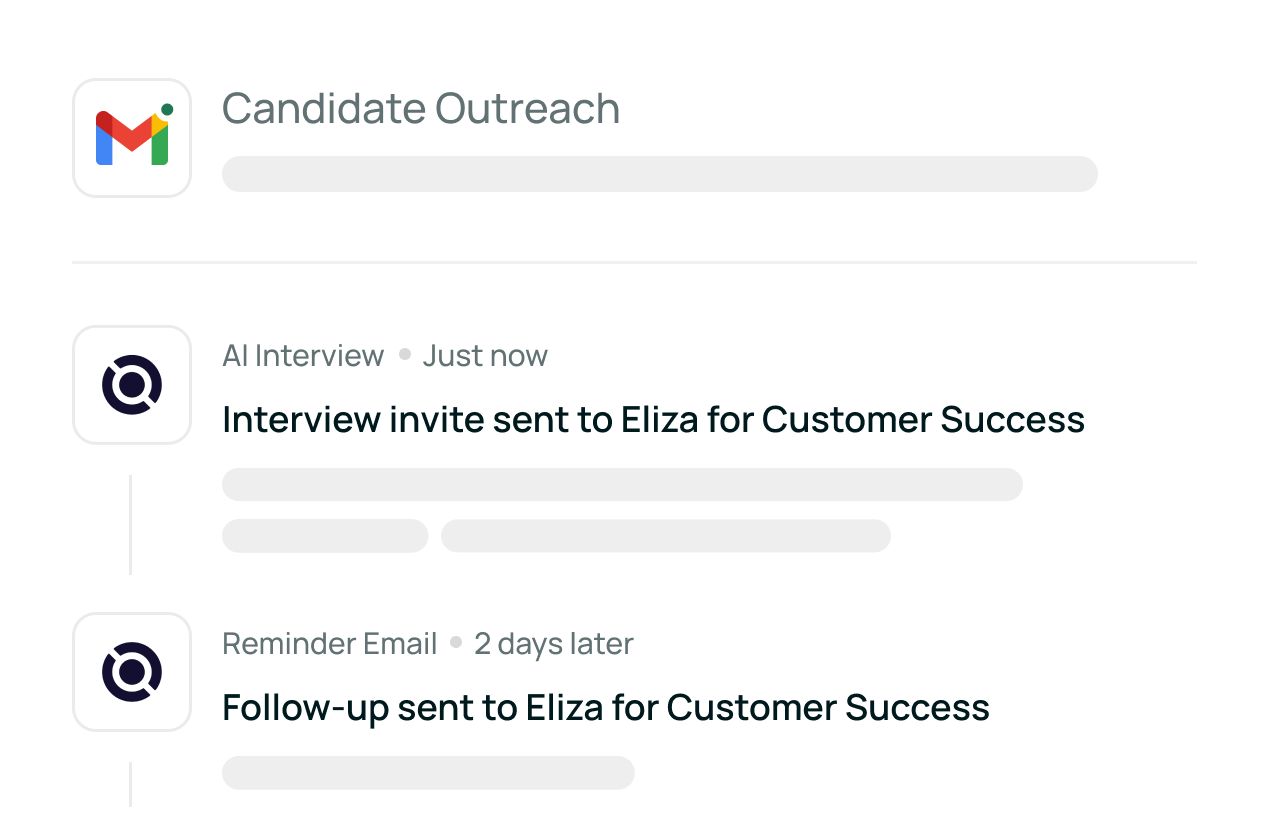
SIA finds the time, books the panel, sends the link.
Recruiter’s lens
The ones that matter most are the ones nobody built a screen for. Ask SIA instead, and the answer comes back while you're still on the same screen.
Find your tool ->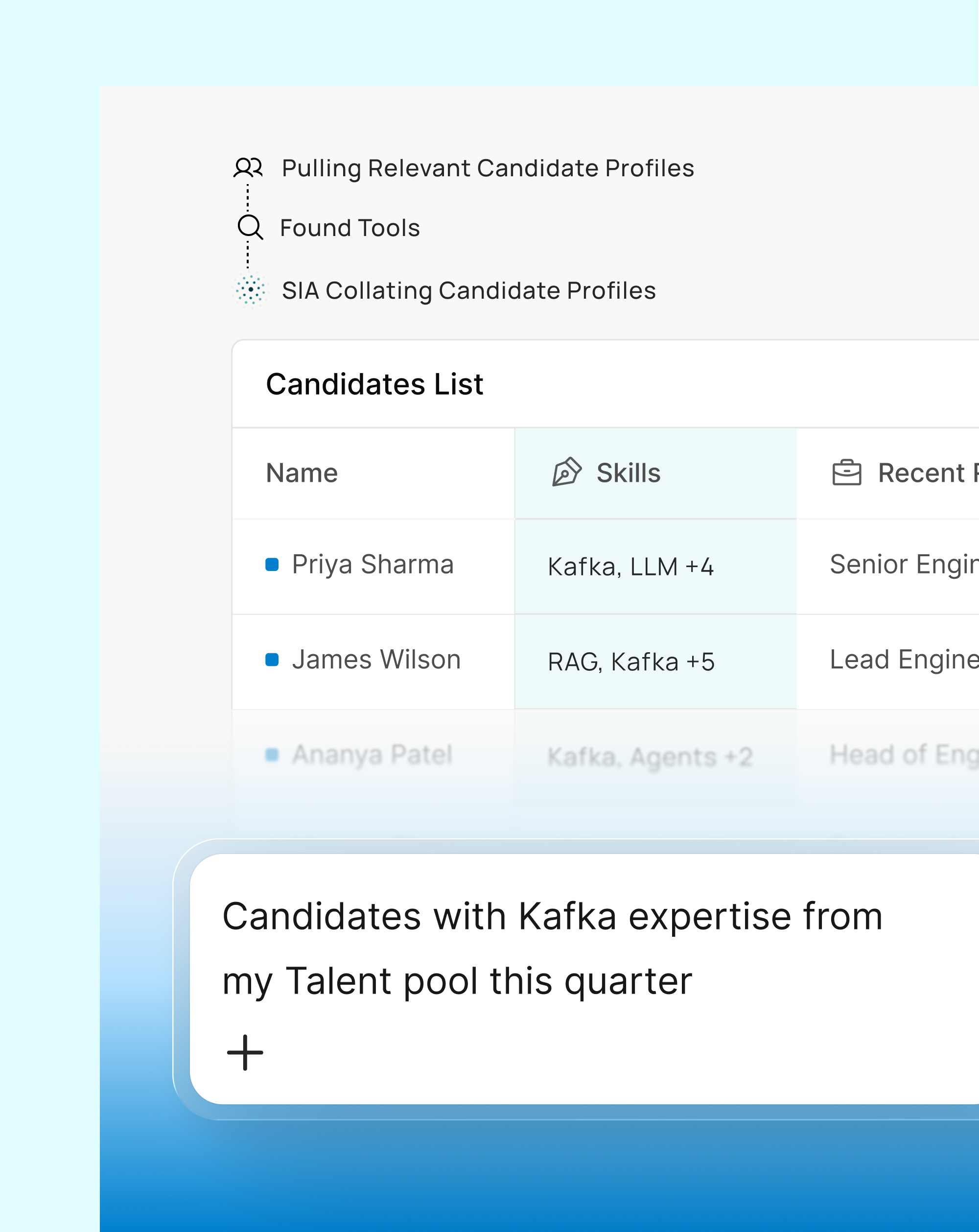
Your day is split across tabs.
SIA is where your team comes to get answers, take action, and keep every role moving. Without switching tabs or waiting on anyone.
For the hiring manager
Matching scores, AI interview grades, and your own Zoom notes — weighed together. So the list you're handed isn't a starting point you have to redo. It's a judgement you can check.

Designed for hiring, built on trust
SIA holds onto what your team has decided, and quietly refuses anything it shouldn't act on — in the workspace and in chat.

Your institutional memory, held by SIA
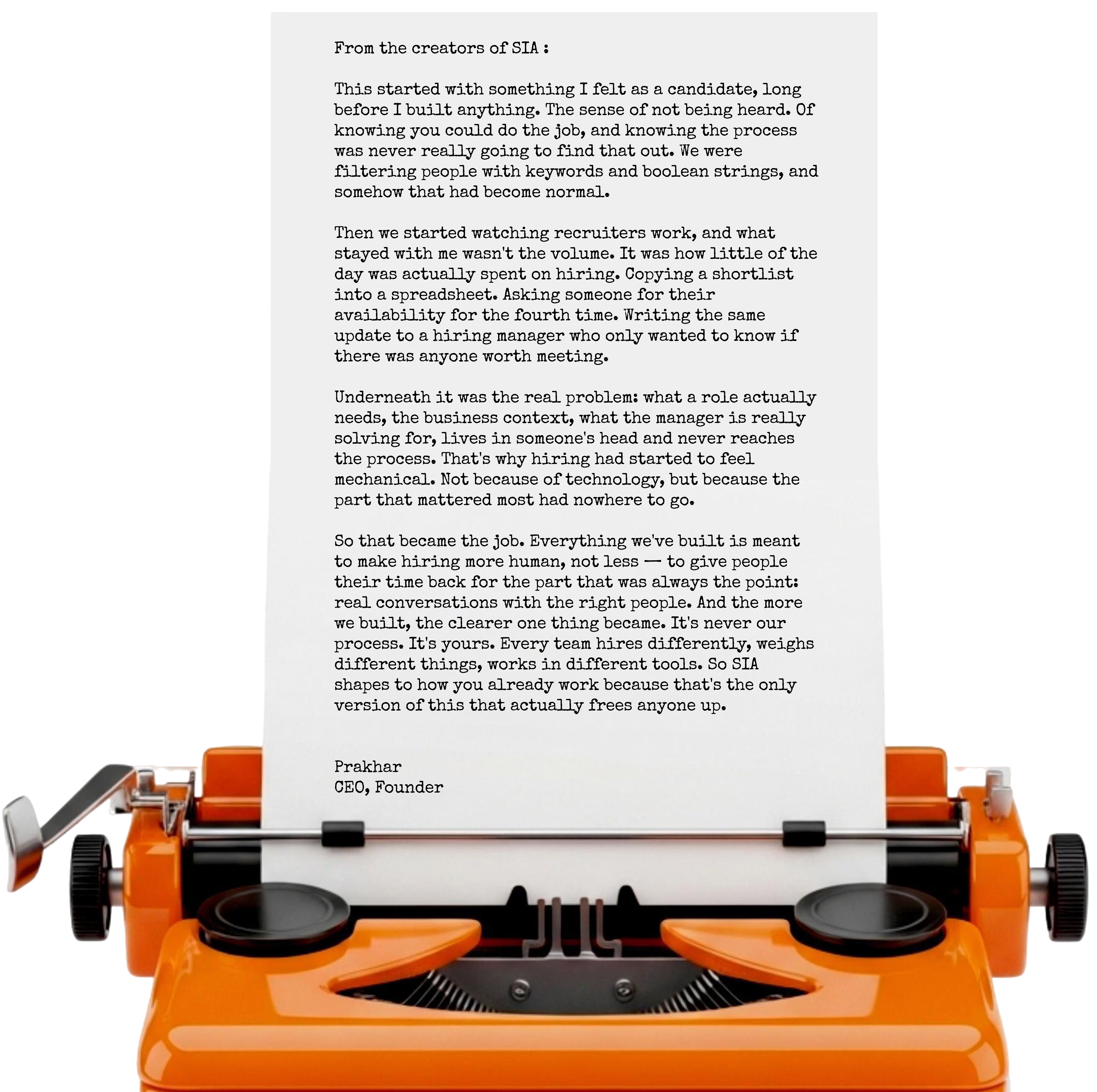
SIA builds a record of how your team evaluates candidates as they work, in the background of the decisions your recruiters are already making.

AI governance, built into the engine
SIA won't act on protected characteristics whether the request comes from a recruiter, a hiring manager or an admin.
DECISION GOVERNANCE IN ACTION
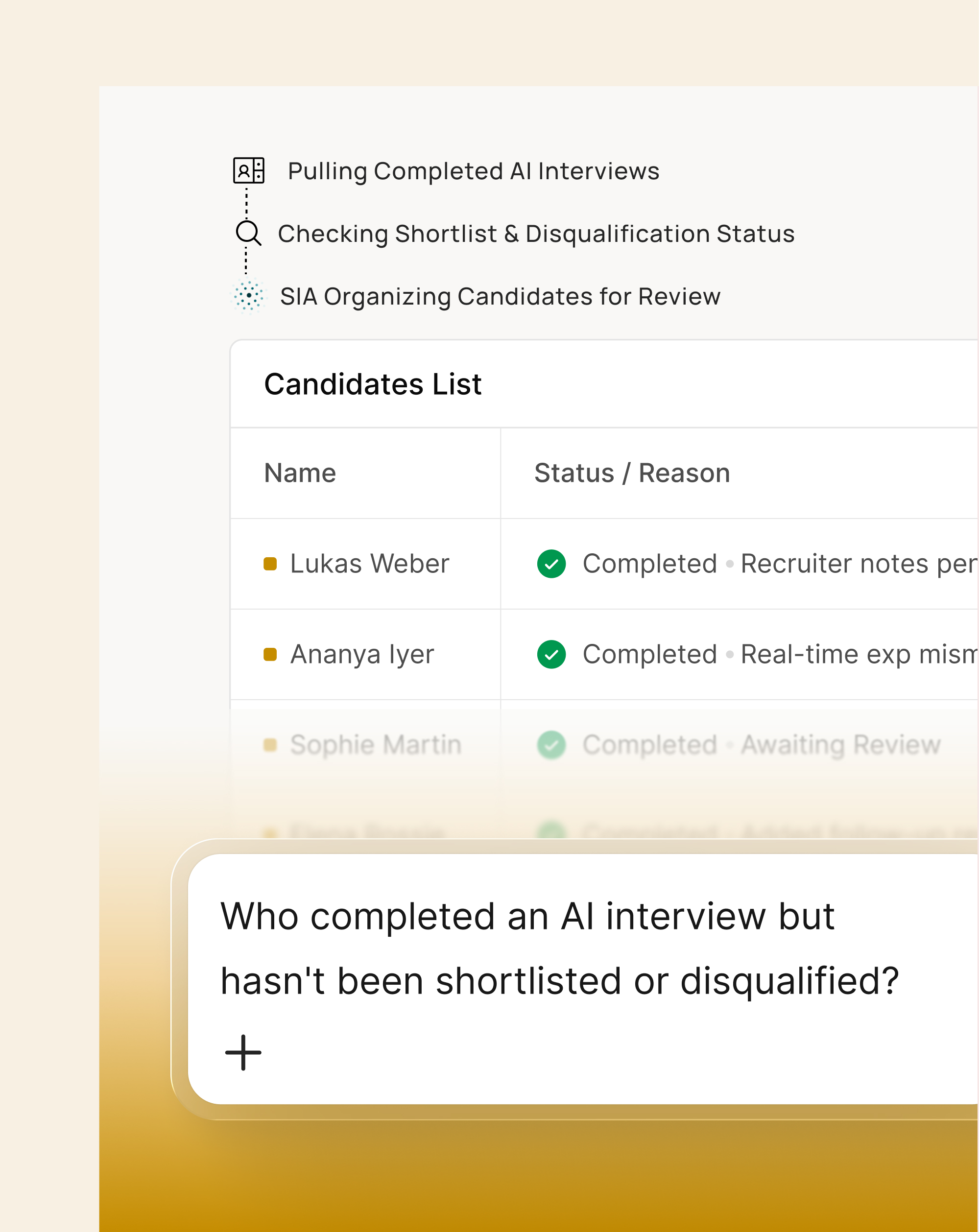
You don't always want to click through a pipeline. Sometimes you just need to know, “who finished an AI interview but hasn't been shortlisted?” or “who are the top five candidates for this role?”


AI cOMPLIANCE IN ACTION



SIA Chat is the conversational way to run hiring with SIA, Senseloaf's agentic hiring system. You tell SIA the hire you need. SIA plans the work, screens the pipeline, and moves candidates forward. Nothing that involves judgement moves without your approval.
No. Chat is how you reach a connected set of recruiting agents. Matching, prescreening and interviewing used to run as separate experiences. Now they share context and hand work to each other. The complexity stays inside the system. The experience stays simple for you.
"Write the job description for a support role in Austin."
"Screen everyone who applied this week."
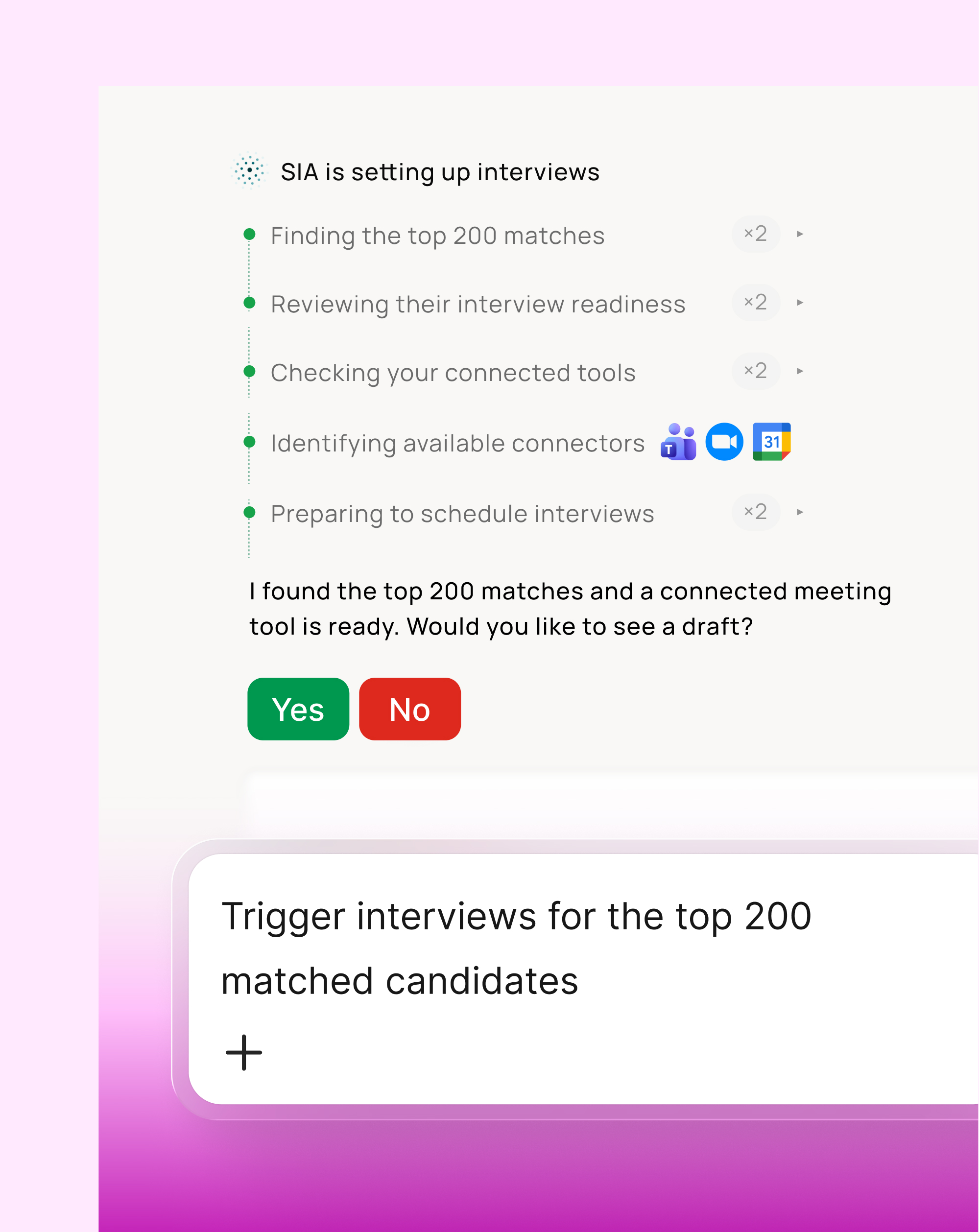
"Set up interviews for the shortlist."
Say the task in plain words. SIA decides which agents run and in what order. You do not pick the tool or build the workflow.
The Job Generation Agent writes the role. AI Matching finds the right candidates. AI Prescreening qualifies them. AI Interview interviews at scale. The Hiring Automation Agent watches the signals from the other four and moves candidates between stages based on rules you set once.
A general assistant gives you a text. SIA does the work. SIA sits on your live pipeline, writes the role, runs the screen, books the interview, and remembers how your team hires. ChatGPT and Claude start every conversation from zero.
SIA does not act on its own judgement. Two things move without a click from you, and you configure both: the stage rules you set once, and the prescreening disqualifiers you define, which can close an application automatically. Everything that involves judgement comes to you with the evidence behind it first. That covers the shortlist, who advances, and how a role is scored. Every automated action stays visible in the record, and you can change the rule that produced it at any time.
Yes. Every action comes with the evidence behind it. Open a candidate and see what SIA matched on before you approve the next step.
Yes. SIA has a memory that works as an organisational learning engine. Every signal you add to a matching strategy, every weight you adjust, and every suggestion you refuse becomes a pattern. Memory works at two levels: across your organisation, and per job. SIA gets better from outcomes, not just from the brief.
No. SIA integrates directly with your ATS and syncs jobs, applications, statuses and notes back to it. Your ATS keeps holding the record. You ask SIA for what you need, and the work lands where your team already works.
MCP opens SIA to the rest of your stack, not just your ATS. Direct integrations cover the systems your hiring already runs on. MCP means SIA is not a closed system, so it can connect to the other tools your team works in.
Lean talent acquisition teams at startups, SMBs and mid-market companies. It fits teams that hire at volume with few recruiters. Two recruiters get the capability of a large hiring operation without the headcount or the setup overhead.
Yes. High volume with few recruiters is the case SIA is built for. SIA runs matching, prescreening and interviews across open roles at the same time, and keeps a separate memory for each job, so one role's preferences never leak into another.
No. SIA takes the repetitive work: writing the role, sorting the pipeline, qualifying candidates, scheduling and running first interviews. Your recruiters keep the judgement calls and the candidate relationships.
No. You can start by asking. When you are ready to automate stage moves, you set the rules once and the Hiring Automation Agent runs them from then on.
Experience SIA Chat
Bring a role you're hiring for and we'll show you what SIA does with it. Come as you are.
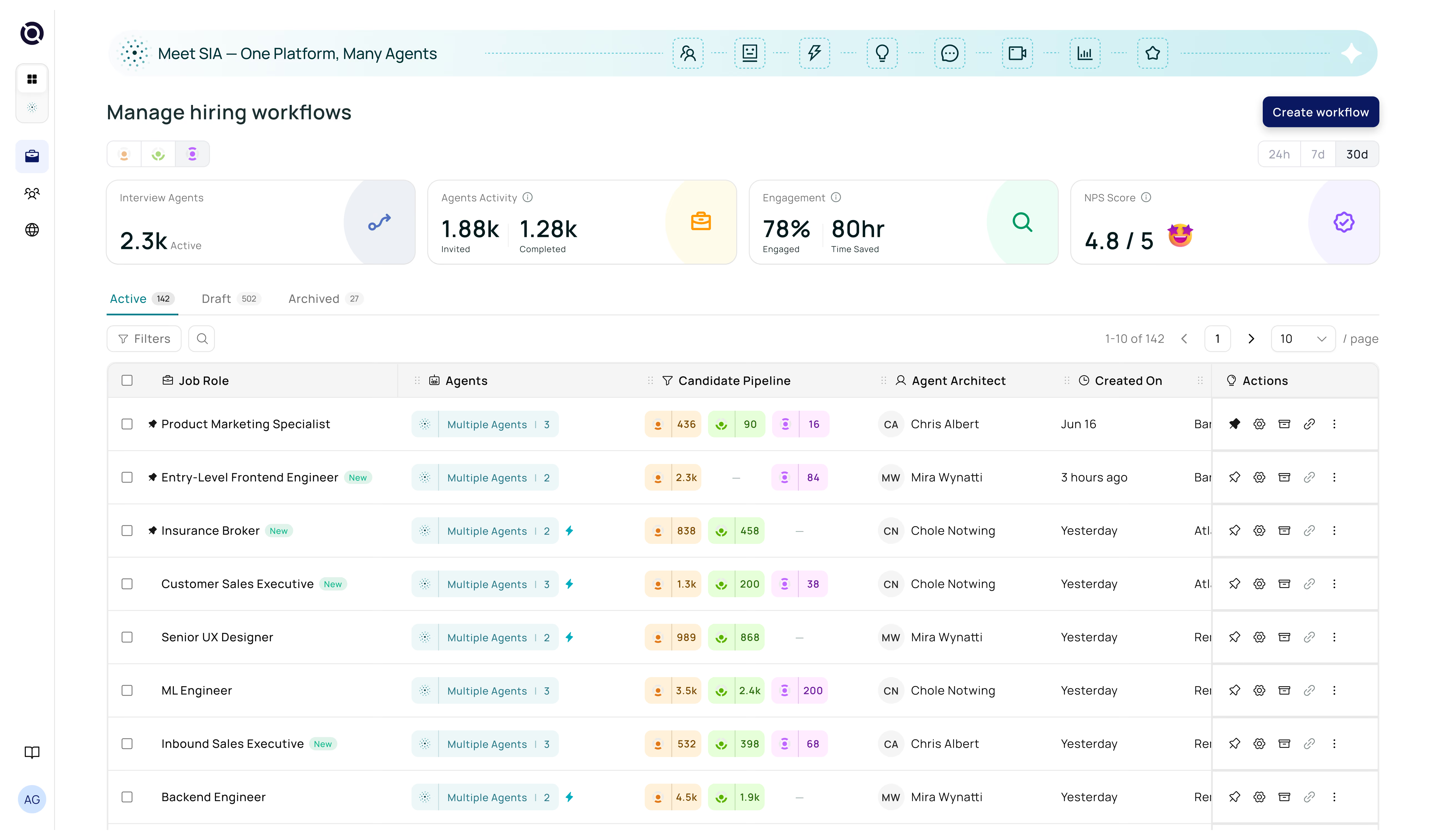

Find your next best hire with SIA
US Office
10216 Wind Cave Trl Austin, Texas, 78747
India Office
#42, Akshaya, Sugama Layout, Akshayanagar, Bangalore 560068
Contact Us
+1 (254) 279-4695