.png)

AI INTERVIEWER
Every role gets its own questions. Every candidate gets the same standard. Designed from your job description, approved by your team, scored on what the role requires.
TRUSTED BY TALENT TEAMS WHO HIRE AT SCALE










THE CHALLENGE
An interview without a rating scale measures how the conversation felt, not whether the candidate can do the job.

A week lost to first rounds on one req

Hiring managers who re-interview because scores don't compare

Score drift between morning and end-of-day interviews

INSIDE AN INTERVIEW
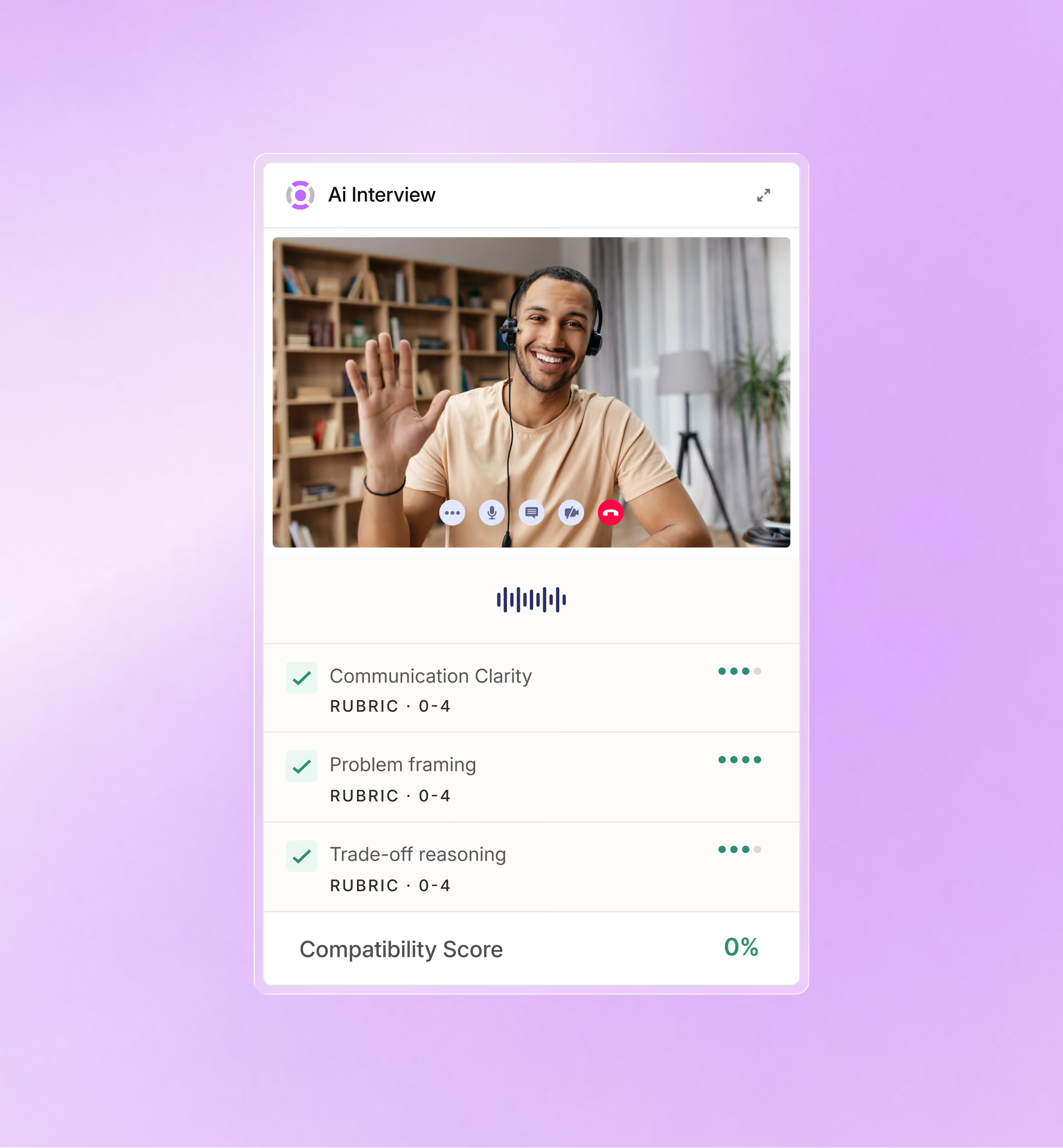
A live transcript on one side. The scoring on the other, filling in as she answers. By the time the candidate signs off, your report is written.
.svg)
.svg)
.svg)

.svg)
.svg)

How interviews work
Stage 01 · The Invite
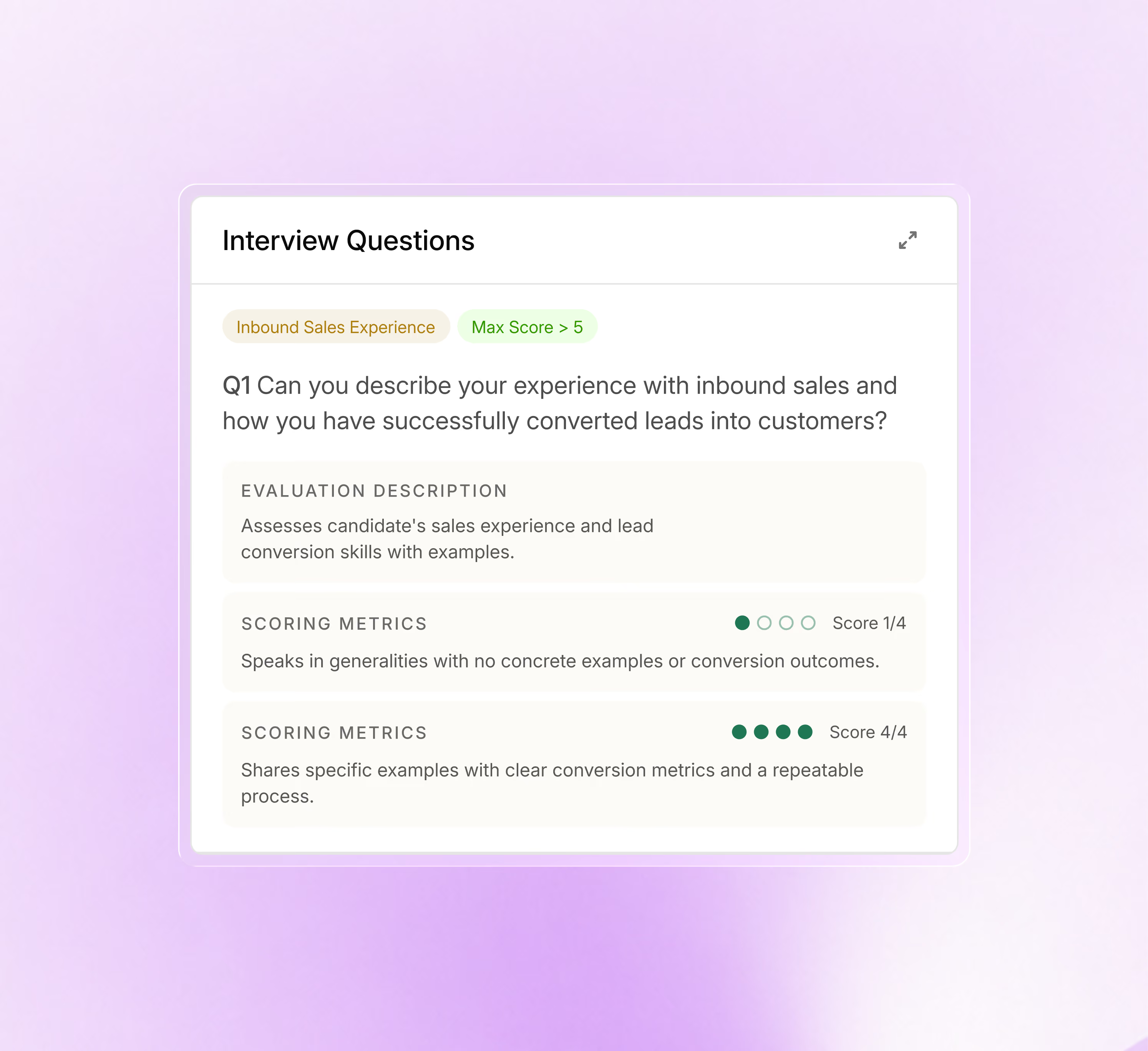
The agent introduces itself as AI, captures consent, and works through your rubric. It probes when an answer is thin and moves on when it isn't.
Stage 02 · The Conversation
Once a candidate clears prescreening, they get a secure link. Any device, any hour, plus reminders before the deadline.
Stage 03 · The Score and Integrity Check
Each answer scored 0–4 per competency, traceable to the exact moment in the transcript. Proctoring, response quality filtering, and derailment detection run alongside.
Stage 04 · The Report
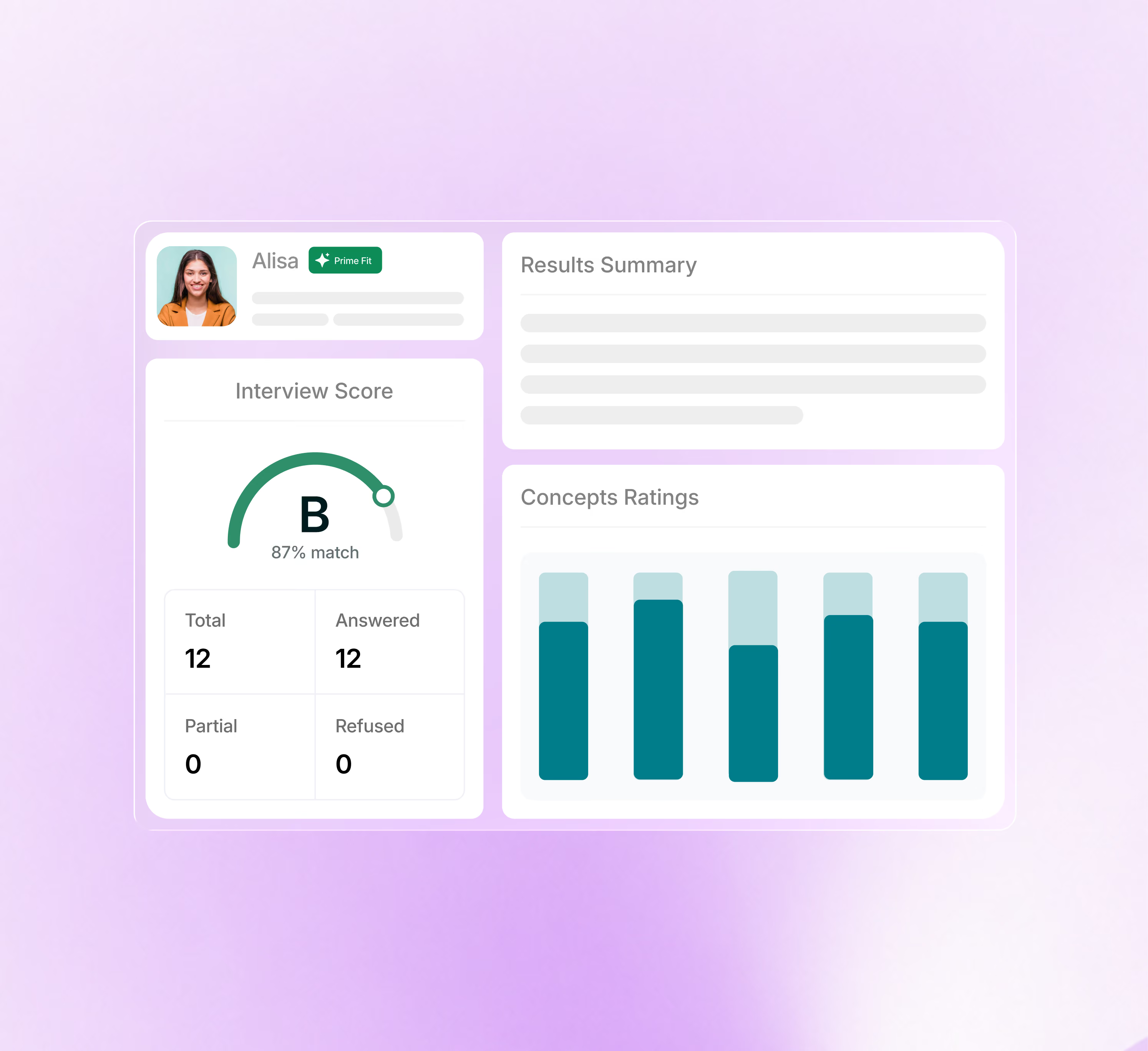
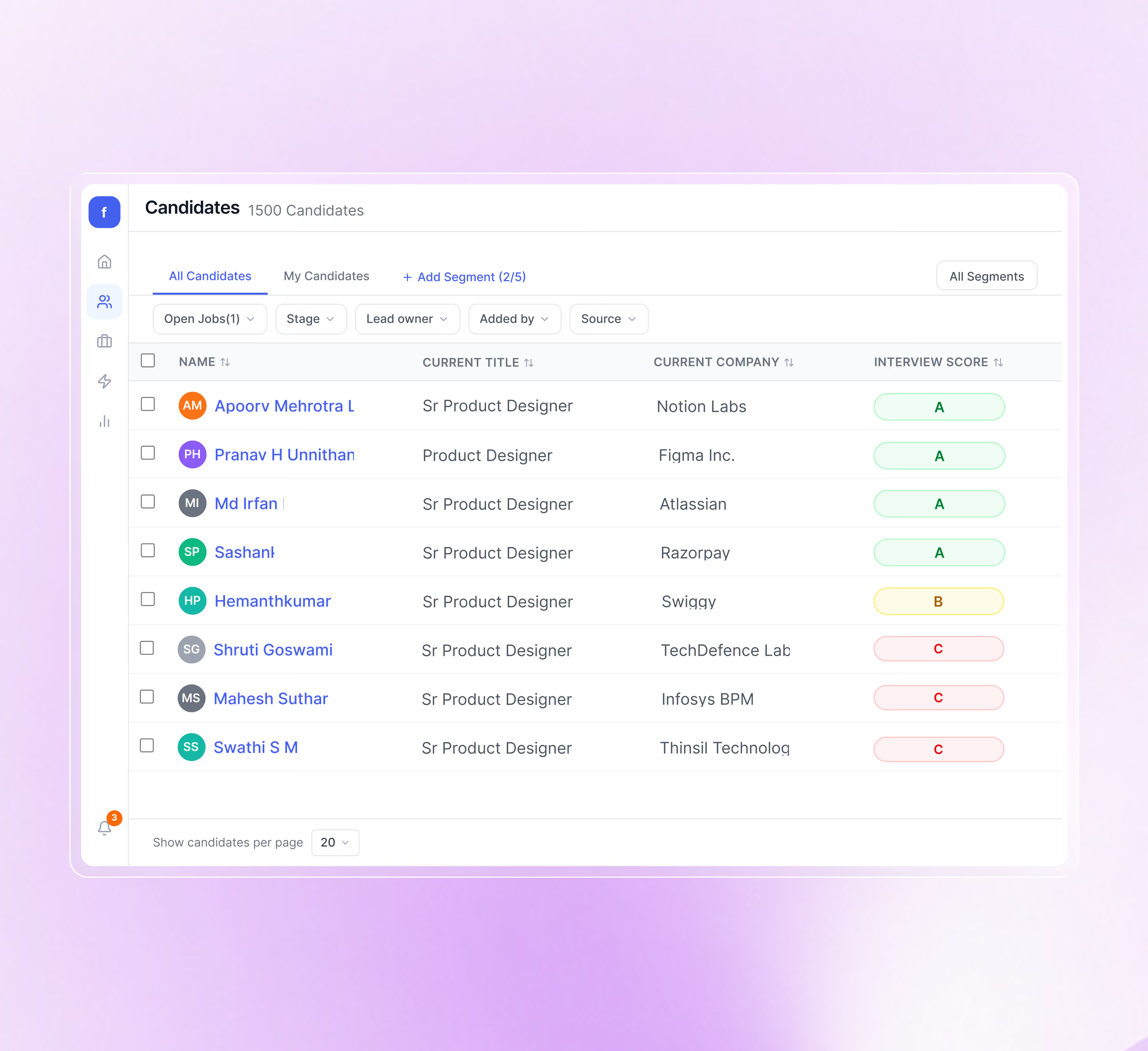
The full report lives in your Senseloaf dashboard, with the transcript and video side by side.
WHAT YOU SEE

Every answer scored against the concept it belongs to — problem solving, collaboration, whatever the role runs on.

The complete interview, with the answer behind each score.

Send the graded interview to a peer interviewer, a senior leader, or a client in one click.
ON THE OTHER SIDE

The agent introduces itself and captures consent. Guardrails keep the conversation on track.

Up to three attempts, a window of 3, 7, or 14 days, in the language they choose.

An invitation you write once, with up to three follow-ups sent automatically.
Growth in annual hiring volume
Candidate Experience Score
Manual screening effort removed


ATS integration
SIA connects to your existing ATS, reads candidate data where it lives, and writes scores, conversations, and interview results back where your team will actually find them.
See all Integrations ->











DECISION GOVERNANCE IN ACTION
You don't always want to click through a pipeline. Sometimes you just need to know, “who finished an AI interview but hasn't been shortlisted?” or “who are the top five candidates for this role?”



AI cOMPLIANCE IN ACTION


The Working Pilot

FREE
Qualified buyers run the full 14 days at no cost.

REAL
We pick one high-volume role with your team, configure the screening flow and knockout rules, run on every applicant.

SUPPORTED
Setup, screening flow, FAQ knowledge base, and day-14 success report owned by the Senseloaf solutions team.
The comparison
The category looks identical on a feature checklist. The differences only show up when the hiring manager tries to make a decision from the output.

Score lifecycle

Re-scored on every new signal. Interview evidence compounds with the prescreening score into a final, current fit score.
Set at apply, never updated.

Interaction depth
Adaptive and bidirectional. The agent asks, follows up when an answer is vague, and answers candidate questions from your knowledge base.
Scripted question sets. One-way, with no room to probe

proctoring and integrity guardrails
Built-in controls that protect interview integrity and flag attempts to manipulate or bypass the agent.
No guardrails. You watch it back and judge for yourself.

delivery analysis
Analyses the answers against set parameters through transcripts.
Just a recorded sample, with no analysis attached.

concept Analysis
Rates candidates on the distinctive skills the role actually requires.
No way to assess at that granularity.

score evidence
Every score links to the source line in the transcript. Defensible in an audit.
Opaque output. Hard to defend when questioned.

BIAS AUDIT
Scheduled, with results published to you.
Ad hoc, only on request.

Scale
100 interviews running simultaneously.
Linear. Bounded by interviewer calendars.

Funnel velocity
Real-time or on-demand trigger. Interviews start within minutes.
Batch scheduling with latency. Your top candidates accept elsewhere first.

A one-way interview records a candidate answering fixed prompts and leaves a recruiter to watch it later. SIA designs the interview structure from your job context first, then conducts it as a conversation: it asks, listens, and follows up when an answer is thin. What comes back is a graded report with evidence attached, not a queue of recordings.
The transcript of what the candidate said. There is no facial analysis, no voice or tone analysis, and no emotion inference. Candidates are evaluated on the substance of their answers against the criteria you approved for the role, and nothing else. Nothing about how someone looks or sounds enters the grade.
SIA generates the interview structure from the job configuration. From there you reorder, delete or rewrite any question by describing what you want: tune it for seniority, add a scenario question, point it at a responsibility that matters. You review the whole structure before a candidate is invited, and the configuration is retained for reference.
Not on its own judgement. An interview grade is an assessment, and every assessment goes to a human for review. What can act without a recruiter is stage automation running on thresholds you set yourself, and any rule can be switched off at any time without deleting it. The AI never makes the call.
Yes. The agent identifies itself as AI and takes the candidate’s consent before the interview starts. The invitation email, the greeting and the closing message are all yours to write, so candidates know what to expect before they join rather than discovering it once the session itself has already begun.
A report card in two panels: the evaluation on the left, the source material on the right. The full transcript with timestamps, the recording linked to the moment in the transcript so you can jump to an answer rather than watching end to end, and the session’s integrity signals. A link opens the criteria and weights behind the grade.
Hundreds of interviews run simultaneously rather than one after another, so a shortlist is interviewed in the time a single panel slot would take. Nobody waits for a calendar to open, which is what usually decides whether your strongest candidate is still available by the time you get round to them.
Either in real time as a candidate reaches the interview stage, or on demand when a recruiter triggers it. The conversation can start within minutes rather than waiting for a batch or a scheduling round, so a candidate who is ready to interview is not held up by your calendar.
It depends on the structure you configure, since you control how many questions there are and how deep they go. The agent follows up when an answer is vague and moves on when it is not, so a candidate who answers well finishes faster than one who needs drawing out.
You decide in advance. Attempts are configurable from one to three, so if you allow more than one, a candidate who drops can start again. The completion window is 3, 7 or 14 days, and that is the deadline reminders work toward. There is no mid-interview pause, which keeps sessions comparable across candidates.
Yes, within limits you set. Configure between one and three reminders, delivered against the completion window you chose. It stops as soon as the candidate starts or the window closes, so nobody is chased past the point where it is useful and nobody is chased after they have already begun.
SIA surfaces tab switching, exits from fullscreen and multi-screen usage, and flags evasive or off-topic answers while nudging the candidate back to the question. These are signals for a recruiter to weigh, not verdicts, and none of them rejects anyone. Each is logged against the transcript moment that triggered it, which makes it reviewable and answerable.
Every candidate is interviewed against the same structure and graded against the same criteria your team approved. Every grade opens beside the transcript passage that produced it, so you can check the reasoning. Criteria are versioned, so the standard applied to a past interview is still on file, and SIA refuses instructions relating to legally protected characteristics.
Yes. The recording sits on the candidate’s report card alongside the transcript, visible to users in your workspace who have access to that role. It is not shared outside your workspace and it is not used to train models. For how long recordings are retained and how deletion works, see the trust centre.
Let's talk
You've seen what AI Interviewer does. Now witness it on your data.