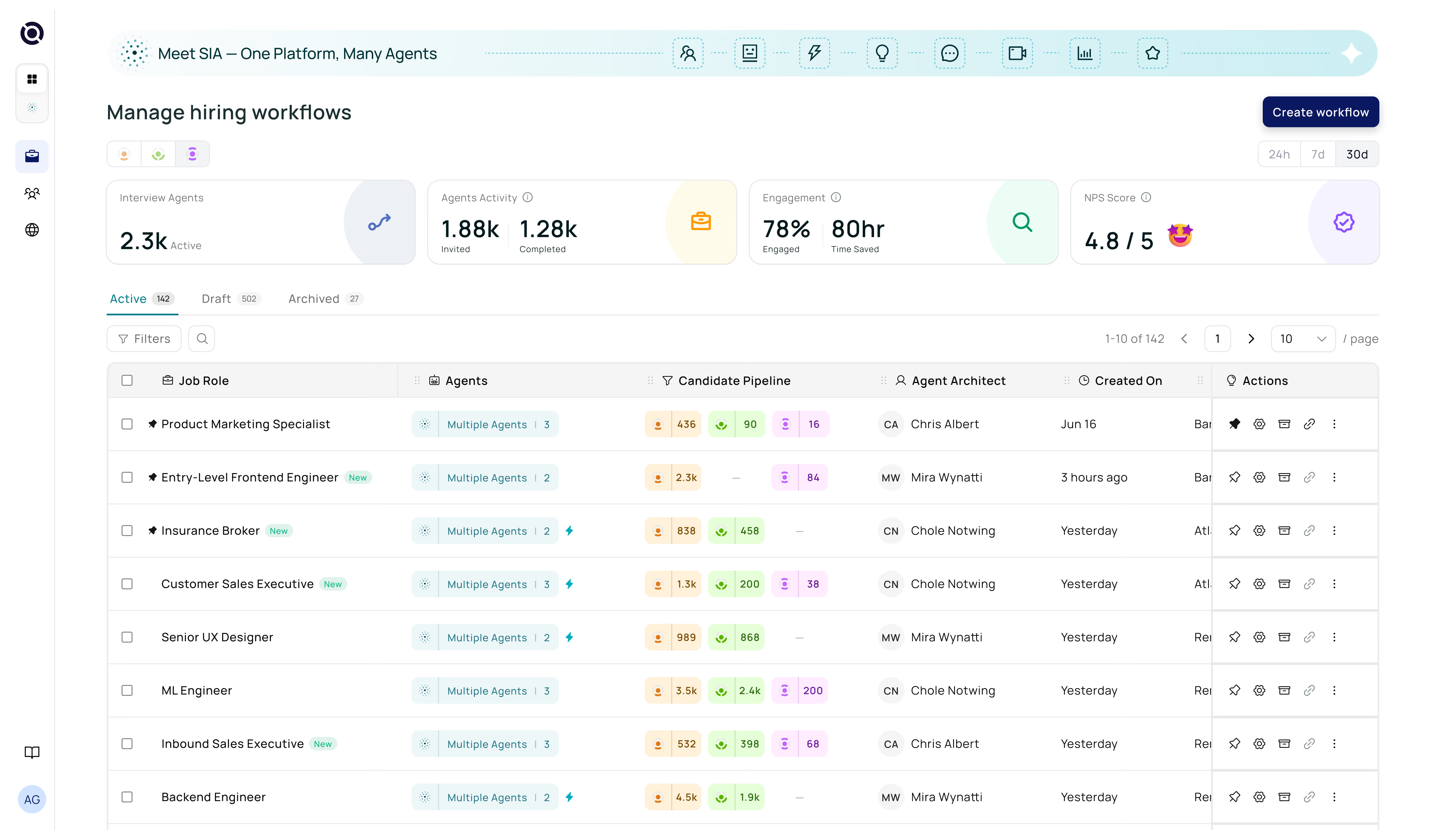
.png)

AI CANDIDATE MATCHING
Reads every resume, scores it against your criteria, and ranks the shortlist – without keyword filters, manual skims, or anyone reaching page four.
.svg)
.svg)
.svg)

.svg)
.svg)

TRUSTED BY TALENT TEAMS WHO HIRE AT SCALE












THE CHALLENGE
Nothing in your pipeline holds a consistent definition of fit, so no two applications get judged the same way and who gets read comes down to volume, not fit.

Qualified candidates your filters never surface.

Candidates already in your database, going unsearched.

Lost per role to reading applications by hand.

How matching works
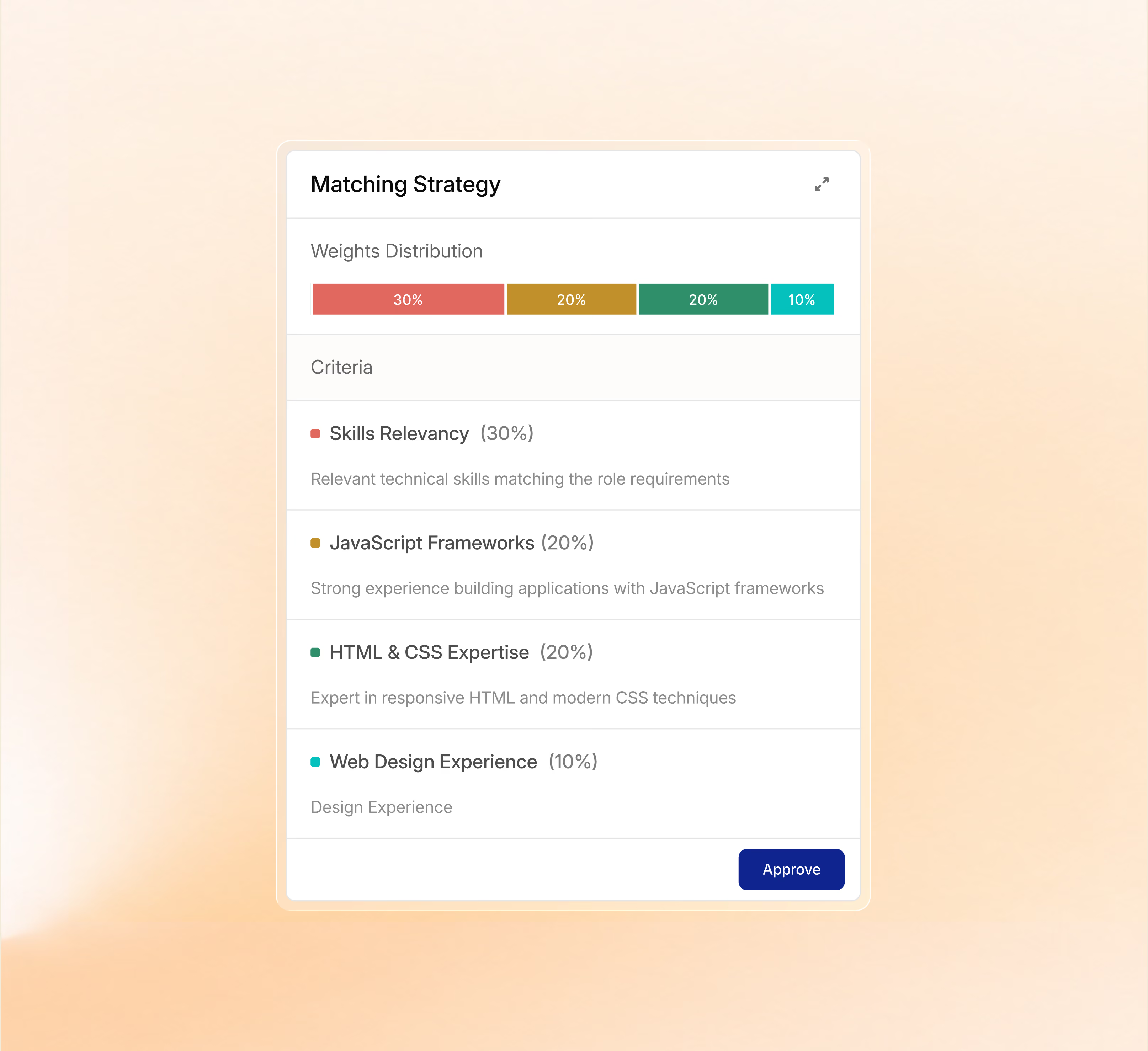

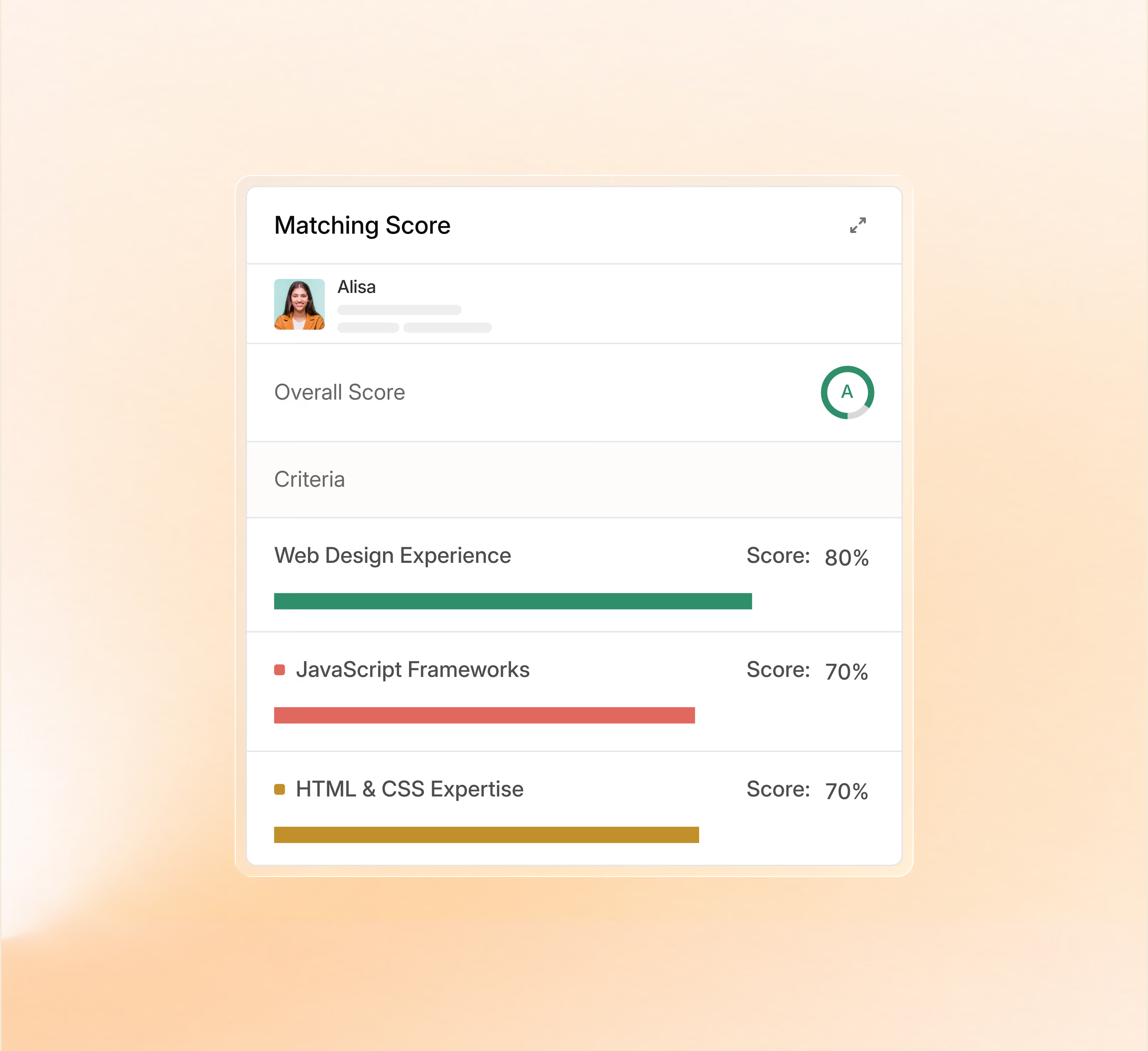
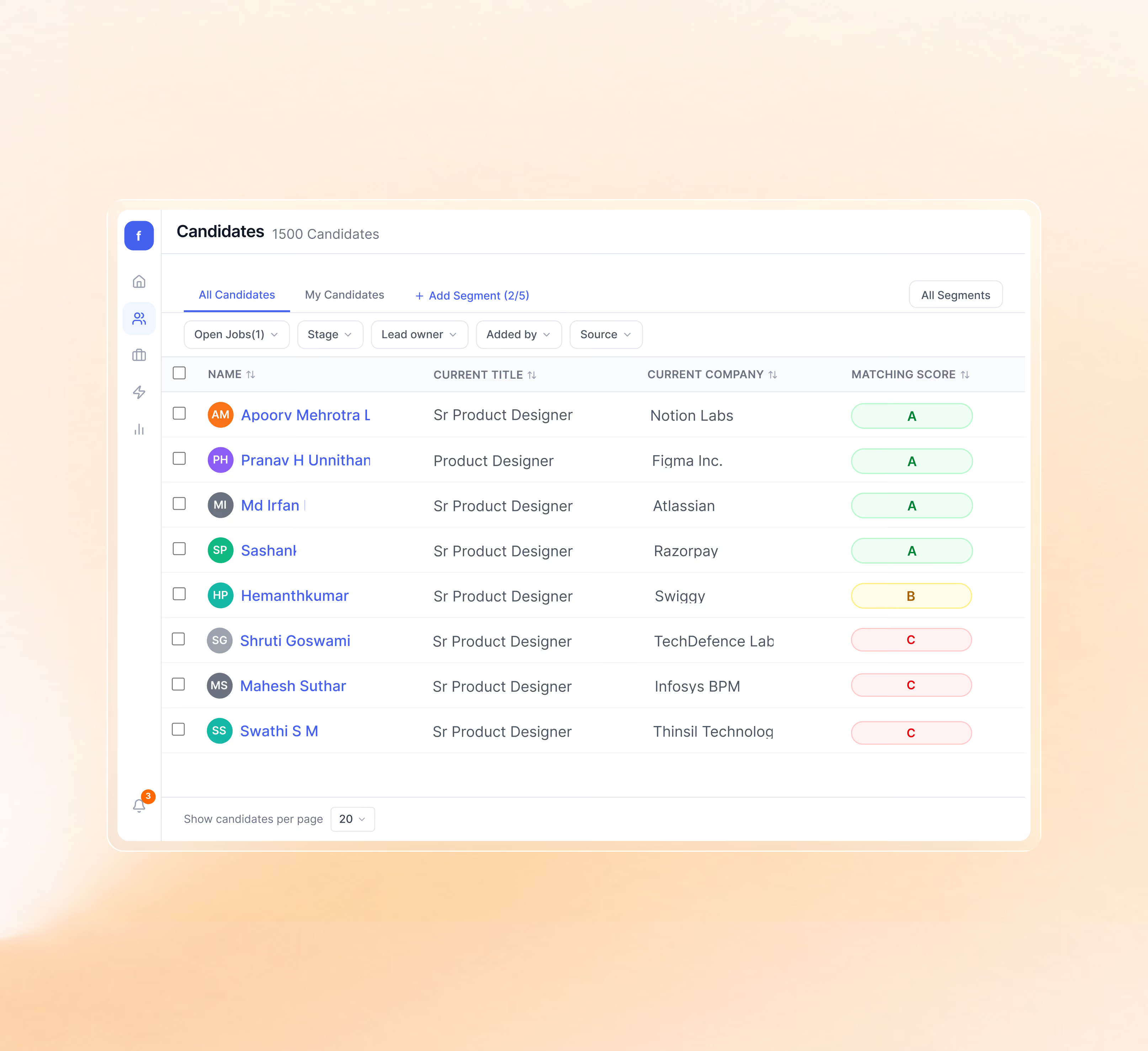
Stage 01 · Signal Definition
SIA auto-generates the rubric from a job brief and your team's preferences from past chats. Your team refines and approves before the agent activates.
Stage 02 · The Parse
Resume, cover letter, questionnaire, project links, plus public web signal. "Led a four-engineer team" matches "engineering manager." New applicants and your existing talent pool, in parallel.
Stage 03 · The Signal Update
Each candidate gets a fit score and a candidate grade (A through E). Every number traces to the resume lines, questionnaire answers, or other evidence that produced it.
Stage 04 · The Surface
Fit scores and rubric breakdowns write back to your ATS as native records. Candidates from your talent pool surface alongside fresh applicants.
Growth in annual hiring volume
Candidate Experience Score
Manual screening effort removed


ATS integration
SIA connects to your existing ATS, reads candidate data where it lives, and writes scores, conversations, and interview results back where your team will actually find them.
See all Integrations ->











DECISION GOVERNANCE IN ACTION
You don't always want to click through a pipeline. Sometimes you just need to know, “who finished an AI interview but hasn't been shortlisted?” or “who are the top five candidates for this role?”



AI cOMPLIANCE IN ACTION



FREE
Qualified buyers run the full 14 days at no cost.

REAL
We pick one high-volume role with your team, configure the screening flow and knockout rules, run on every applicant.

SUPPORTED
Setup, screening flow, FAQ knowledge base, and day-14 success report owned by the Senseloaf solutions team.
The comparison
The category looks identical on a feature checklist. The differences only show up when the hiring manager rejects the shortlist.

Score lifecycle

Re-scored at every stage. The resume score compounds with screening evidence and interview signal into a single, current fit score.
Scored once at apply. Never revisited as the candidate moves forward.

Matching method
Parses the full resume and scores it against your job requirements, so you see who's worth moving forward without reading every application.
Keyword and skills filters. Misses candidates who describe the same experience in different vocabulary.

Evaluation Transparency
Every criterion links back to the resume line that produced it. Auditable to the regulator.
Black-box output. No trace from score back to source.

Custom Signals
Logged as you work. Every signal you add to a matching strategy, reweight, or reject is versioned.
No structured way to define, tune, or record your own criteria.

EEOC Compliance
Agents are blocked from acting on prompts or criteria tied to legally protected characteristics.
No mechanism to control or map compliance against.

Defensibility
A score, plus the source line behind it.
A score, and nothing behind it.

Keyword matching returns applications that used your exact words. SIA builds a matching strategy for the role: a table of criteria, how each is measured from a resume, and how much it weighs. Every resume is graded against it, so “led a four-engineer team” reads as engineering management and candidates are assessed on the role, not your vocabulary.
No. SIA generates the first matching strategy from the job description and suggests where to adjust: raise a weight, add a criterion, name a certification. You review and approve it before anything is scored. Only the most recent version can be approved, so what is live is always what you last signed off.
Down to the rule. Open any criterion and you read the scoring logic that produced the result, not a summary of it. The report card puts the evaluation on the left and the parsed resume on the right, so you can check any claim against what the candidate actually wrote without leaving the page.
Yes, and you see exactly what changes before it happens. Refine the strategy by describing what you want, and a confirmation shows a full diff: what was added, removed, reweighted or rescored, and how many candidates will be rematched. Changed grades carry an up or down marker, and updated grades push to your ATS.
No. A matching grade is an assessment, and every assessment goes to a human. What can act on its own is a hard rule you configured yourself, or stage automation running on thresholds you chose. Any rule can be switched off without deleting it, and matching never moves a candidate by itself.
Yes. Matching scores and grades sync into your ATS candidate view as native records, and your pipeline ranks there, so the strongest candidates surface at the top. Senseloaf connects to 24+ ATS and HCM platforms. Your recruiters do not need a new login to see the results, and nothing has to be exported or copied across.
When you ask, yes. SIA surfaces the best-matching candidates from the people already in your system, so a new role starts with the pipeline you already paid for. It does not silently re-score your whole history every time a role opens, so nothing changes in your database without you asking.
Two paths. Upload up to 50 resumes at a time and they are graded as they land, so you are not waiting for a batch to finish. Connected through your ATS there is no cap: applications are graded as they arrive, however many come in, so volume never turns into a queue for your recruiters.
SIA ranks and you decide, so you can act against a ranking whenever you want. There is no score to hand-edit. If you disagree systematically rather than in one case, that is a signal the criteria are wrong: change them and rescreen, and every candidate is re-graded against the standard you actually want.
Yes. Upload job briefs, requirement documents or your internal hiring notes, and the matching strategy accounts for them. The criteria then reflect how your team actually evaluates for this role rather than what a generic job description implies, which matters most where the written description undersells what the job needs.
It surfaces implied requirements as part of the job configuration. Most job descriptions leave out things the role genuinely needs, and those become criteria you can see and approve rather than assumptions buried inside a score. You keep the ones that are right and remove the ones that are not.
Grades come from the criteria and measurement logic you approved, not from title matching. A founder moving into product, or an engineer who moved into sales, is assessed on whether the evidence meets what the role requires. If a pattern in someone’s history matters to you, put it in the criteria where you control its weight.
Through the strategy editor, as a by-product of normal work. Add a criterion, change a weight or refuse a suggestion, and that decision is applied to future roles, scoped to the department and job title. Refuse “security clearance required” once on an Engineering role and it stops being suggested for Engineering, for every recruiter.
Every candidate is graded against the same approved criteria, and every grade opens beside the resume passage that produced it. Criteria are versioned, so the standard behind a past decision is still on file. Personal identifiers are stripped before data reaches the scoring model, and SIA refuses instructions relating to legally protected characteristics.
Matching parses and evaluates applications in over 60 languages, including English, Spanish, French, German, Portuguese, Mandarin, Japanese, Arabic and Hindi. Your team works in its own language while candidates are evaluated in the language they applied in, so you do not need a separate screening process per region or a translation step before evaluation.
Let's talk
Now witness it on your data.