.png)



Introduction
TL;DR: Successfully implementing AI agents in HR processes requires five stages: audit your current workflows, identify quick-win automation candidates, pilot one agent in a contained workflow, measure outcomes against defined KPIs, then scale with reusable architecture. The organisations seeing the fastest results start narrow and specific — not broad and ambitious.
Most failed HR AI deployments attempted full-platform transformation before proving value in a single workflow. The playbook below takes the opposite approach. Start with the highest-volume, most time-consuming task in your recruiting process — and let results build momentum.
The 5-Stage Implementation Playbook
Stage 1 — Audit Your Current HR Workflows
Before selecting any technology, map the existing hiring process end-to-end. Identify where time is being spent, where errors are most common, and where volume creates bottlenecks. The goal is to find the workflows where an AI agent would have the highest and most measurable impact. Common findings include: CV screening consuming 60–70% of recruiter time, interview scheduling taking 2–3 days per candidate, and onboarding document collection running on manual email chains.
Tool: Use your hiring metrics baseline to identify the biggest time sinksStage 2 — Identify Your Quick-Win Automation Candidates
The best candidates for initial AI agent deployment share three characteristics: they are high-volume (happening constantly), repetitive (following a consistent pattern), and time-sensitive (delays have real business consequences). In recruiting, this almost always points to candidate screening and interview scheduling first. For a comprehensive view of where automation pays off fastest, see this guide to AI in recruiting automation.
ROI can appear within 30 days for screening and scheduling automationStage 3 — Pilot One Agent in a Contained Workflow
Deploy a single agent in a clearly defined scope — for example, AI Prescreening Agent for all applicants to one role or department. Define your success metrics before launch (time-to-shortlist, recruiter hours saved, candidate satisfaction score). Run the pilot for four to six weeks, gather data, and build the internal case for expansion. Choosing the right AI recruiting tool at this stage is critical to pilot success.
Pilot with one role type before scaling to all hiringStage 4 — Measure Against Defined KPIs
The metrics that matter most at this stage are: reduction in time-to-shortlist, decrease in recruiter hours per hire, improvement in candidate satisfaction scores, and application completion rate. Compare your results against the baseline hiring metrics you established in Stage 1. Use these results to build the business case for broader deployment — and to identify where agent performance can be tuned.
See also: measuring ROI of recruitment automationStage 5 — Scale with Reusable Architecture
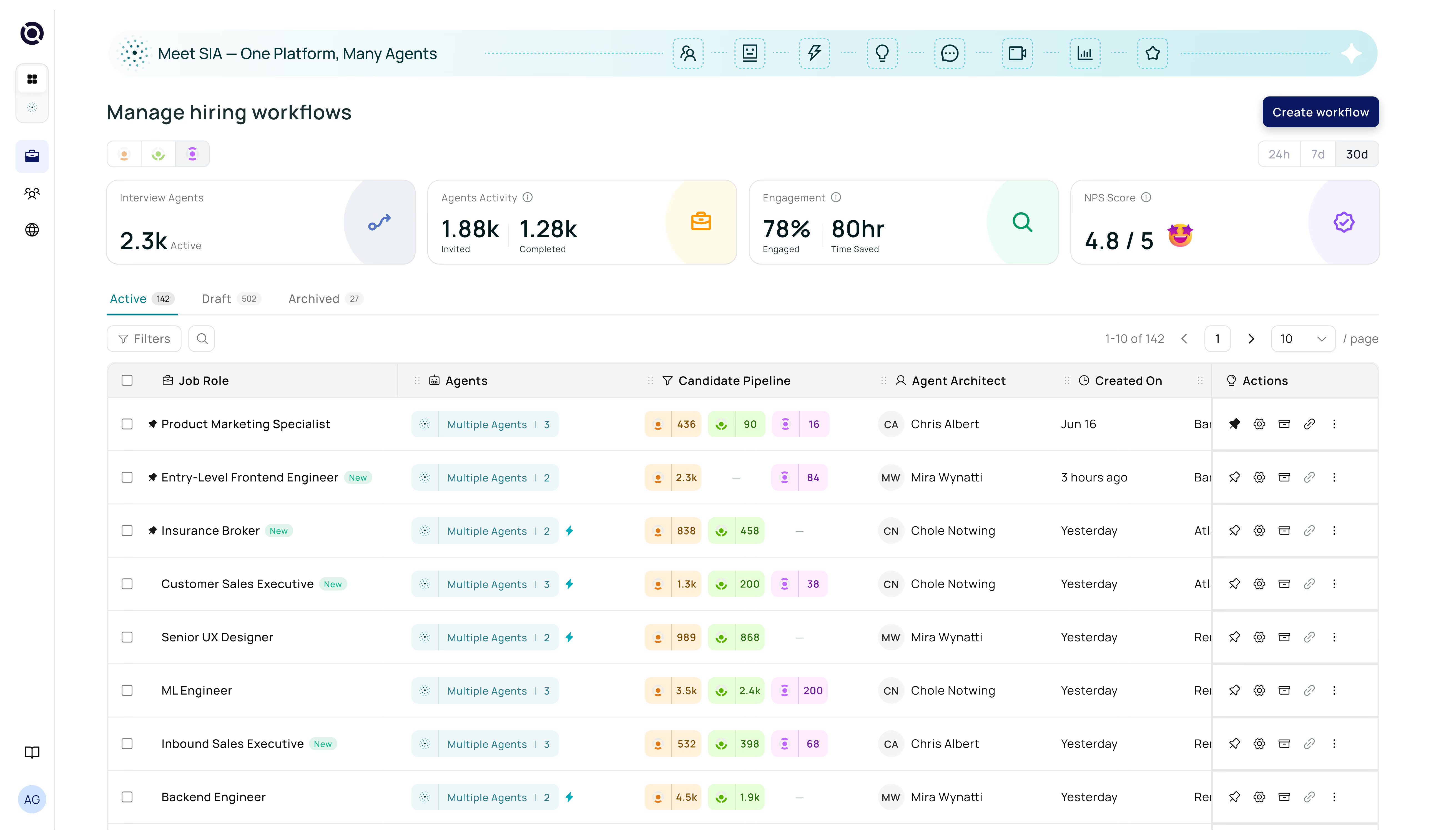
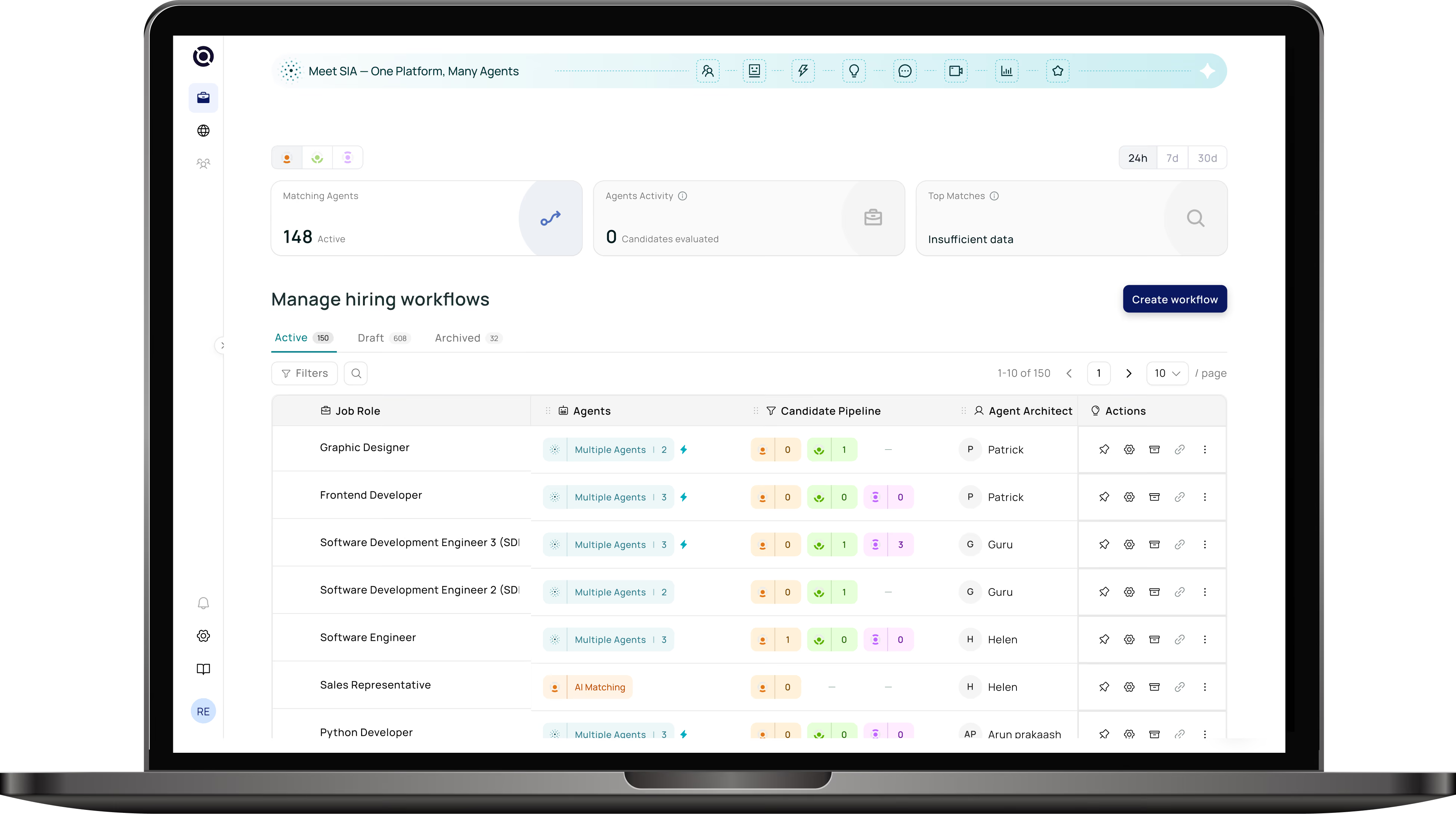
Once your pilot delivers measurable results, expand systematically. The key principle at this stage is reuse — deploy additional agents that build on the same integration patterns and data structures as your pilot. Senseloaf's SIA Suite is designed for this: AI Candidate Matching Agent, AI Prescreening Agent, and AI Interviewer Agent share context and work as a coordinated team — each new agent leverages the infrastructure already in place.
Agent orchestration means the second deployment is faster and cheaper than the firstConnecting AI Agents to Your Existing HR Stack
Implementation success depends heavily on integration depth. An AI agent that cannot read from and write to your ATS is limited to isolated tasks. Senseloaf connects natively with the systems most HR teams already run:
Implementation Readiness Checklist
- Current time-to-hire and cost-per-hire baselines documented
- Highest-volume, most repetitive recruiting workflow identified
- ATS integration compatibility confirmed with your provider
- Success metrics defined and stakeholders aligned before launch
- Governance model established — who is accountable for agent decisions?
- Recruiter training plan prepared — focus on oversight and escalation
- Candidate consent and data privacy protocols in place
- Pilot scope defined — one role type, one department, or one hiring manager
Building Your Agentic AI Tech Strategy
Implementation is not just a technology decision — it is a change management challenge. PwC's research shows that organisations that communicate a clear AI strategy to their teams see nearly 5x higher employee comfort with AI tools. The most successful implementations pair technical deployment with a clear internal narrative: AI agents free recruiters to do better work, not eliminate their roles.
Before finalising your implementation approach, it is worth understanding how AI recruiting platforms compare to traditional ATS — and what to look for in a long-term vendor partner. The guide to choosing the right AI recruiting tool covers the key evaluation criteria in detail.
"The organisations that will lead in AI-powered HR are not the ones that deployed the most technology. They are the ones that identified the right workflows, measured the outcomes, and built a culture where humans and agents work as a coordinated team."
— PwC, Future of HR (2025)