.png)



Introduction
As hiring volume grows, even the best ATS setup starts showing friction — resumes pile up, coordination consumes recruiter hours, and candidate experience slows down. The instinct is to hire more recruiters. The smarter move is to add intelligence to the system you already use.
That's what BambooHR AI integration is designed to do: bring structured automation into your existing workflows — without disrupting them, without replacing your team, and without requiring a new platform.
Why BambooHR Hiring Gets Harder at Scale
BambooHR's applicant tracking is built for clarity and control. But clarity and control get harder to maintain as volume increases. Here's what HR managers typically experience:
According to SHRM, recruiters spend up to 60% of their time on administrative coordination rather than candidate evaluation. That's not a people problem — it's a workflow problem. And workflow problems are exactly what BambooHR automation through AI is built to solve.
AI Doesn't Replace Recruiters — It Removes the Work That Doesn't Need Them
The most common concern HR managers raise about BambooHR AI tools is loss of control — the fear that adding AI means handing recruiting decisions to a black box. It's a reasonable concern. Here's what actually happens:
- AI makes final hiring decisions
- Recruiters lose visibility into the process
- AI outputs are opaque and unexplainable
- You need a separate platform to use AI
- AI treats every role the same way
- AI produces inputs — humans make decisions
- Every AI output appears inside BambooHR
- Scores tie directly to candidate evidence
- Senseloaf works natively inside BambooHR
- Agents are calibrated per role and criteria
The goal of BambooHR automation isn't to remove humans from hiring. It's to remove humans from the parts of hiring that don't require human judgment.
What an AI-Powered Hiring Workflow Looks Like
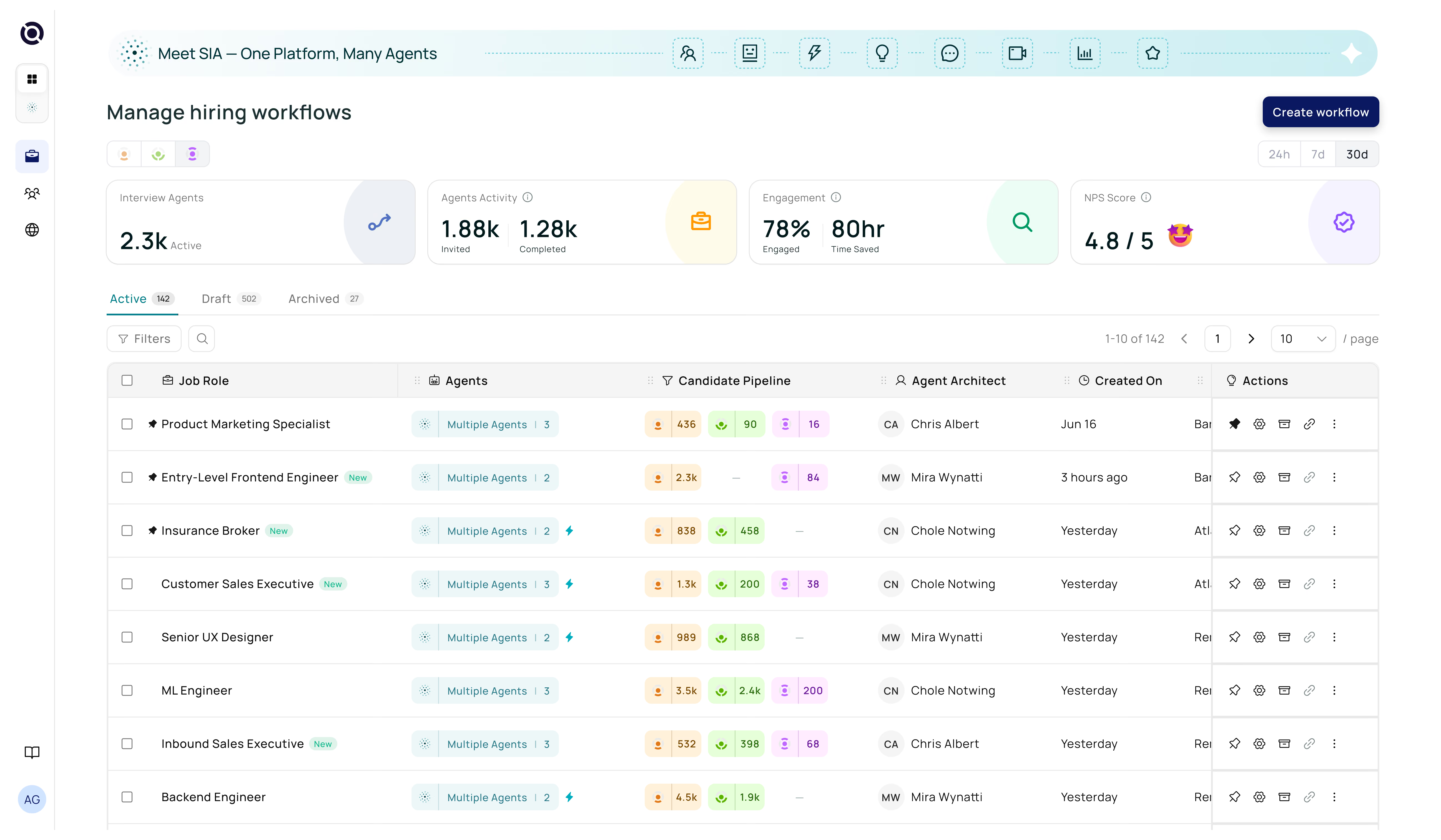
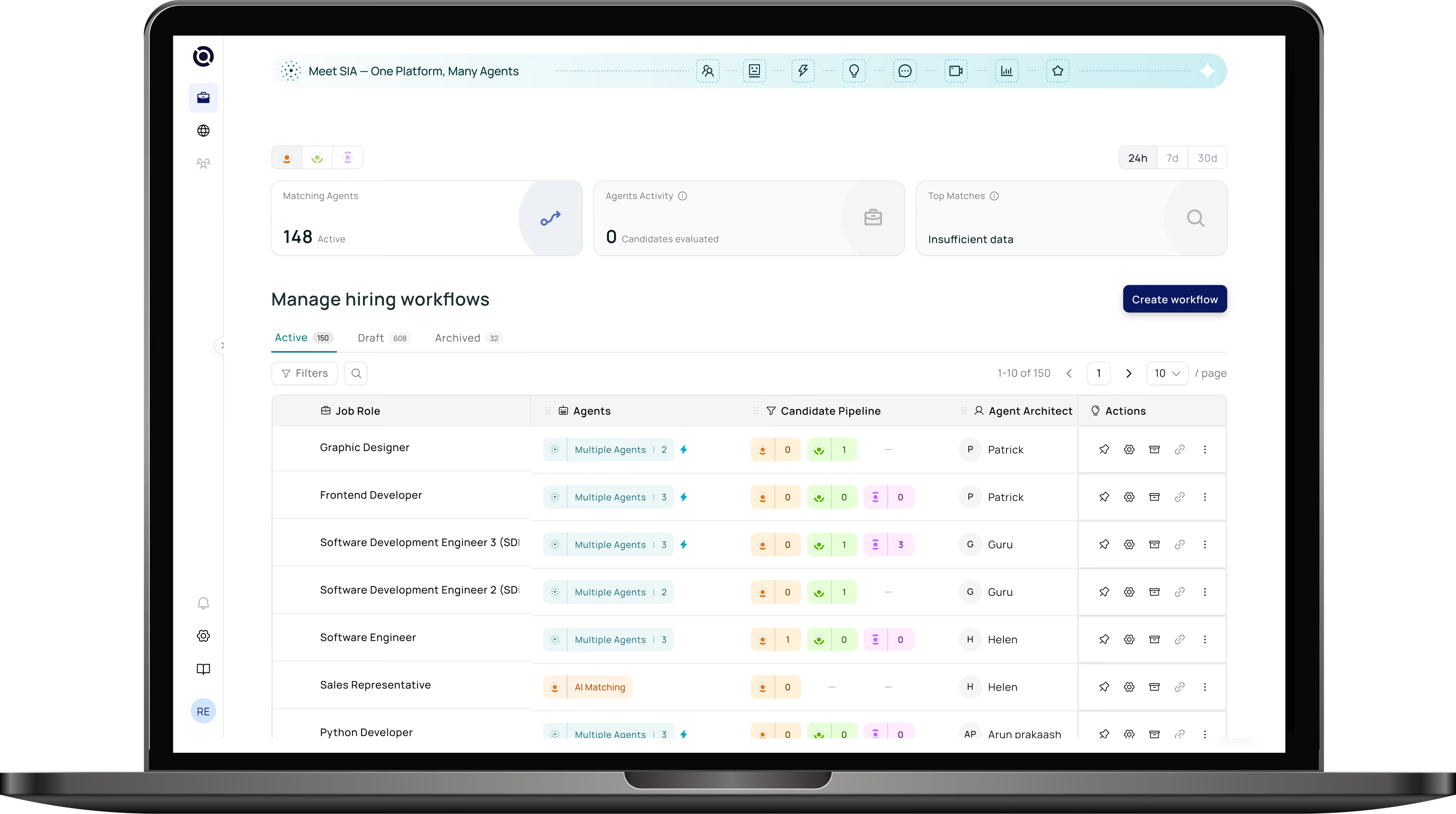
When AI hiring tools integrate with BambooHR, they activate at defined pipeline stages, evaluate candidates based on role-specific criteria, and sync results back into BambooHR candidate profiles — keeping your team in a single system throughout. Here's what each stage can look like in practice.
AI Resume Matching — AI Candidate Matching Agent
When a candidate applies, AI Candidate Matching Agent evaluates their resume against the structured job configuration — role relevance, experience alignment, and skills fit — using a multi-dimensional scoring model, not keyword matching.
- Match score and letter grade (A, B, C) attached to candidate profile
- Rationale tied to specific resume evidence — not opaque ratings
- Flagged strengths and gaps relative to the role requirements
AI Pre-Screening — AI Prescreening Agent
Once a candidate reaches the prescreening stage, AI Prescreening Agent activates automatically and conducts a structured async conversation — covering eligibility, availability, role alignment, and intent — without recruiter involvement per candidate.
- Structured prescreening summary attached to candidate profile
- Pass / review / decline signal with reasoning
- One-click move to next stage for qualified candidates
AI Voice Interviews — AI Interviewer Agent
For shortlisted candidates, AI Interviewer Agent conducts real-time voice-based interviews using adaptive or structured question sets built around the role — no scheduling bottleneck, no interviewer availability constraint.
- Concept-level scores tied to specific candidate responses
- Communication assessment scored independently from technical ability
- Full transcript and session recording link in the candidate profile
Related: How AI Matching Works: Finding the Right Candidates Automatically
What BambooHR Hiring Looks Like With AI Agents
| Hiring Stage | Before AI | After Senseloaf |
|---|---|---|
| Resume review | Manual, delayed, inconsistent | Instant, scored, evidence-backed |
| Prescreening | Recruiter phone calls | Async AI conversation, synced to BambooHR |
| Early interviews | Scheduled, manual, variable quality | Automated voice interviews, structured output |
| Coordination | Recruiter-managed calendaring | Agent-handled scheduling and follow-up |
| Hiring data | Fragmented across tools | Centralized in BambooHR candidate profiles |
| Shortlist rationale | Hard to explain or audit | Traceable to candidate evidence |
Who Benefits Most from BambooHR AI Automation
1–5 Recruiters, 20+ Open Roles
Senseloaf effectively expands recruiter capacity without adding headcount — handling screening and interviews at volume.
Seasonal or Operational Roles
Consistent, structured screening that doesn't degrade as application volume spikes — no extra coordination required.
Remote or Multi-Timezone Hiring
Async interview delivery and structured reporting removes the need for live coordination across time zones.
Related: Candidate Experience in Recruitment: Stats, Trends & Best Practices
What to Look for in a BambooHR AI Agent
Not all AI hiring tools that claim BambooHR applicant tracking compatibility are truly ATS-native. Here's how to evaluate what you're actually getting:
| Criteria | What to Require |
|---|---|
| Integration depth | Two-way sync — AI outputs write back into BambooHR candidate profiles |
| Activation control | Define exactly which pipeline stages trigger AI agents |
| Explainability | Every score tied to specific candidate evidence, not opaque ratings |
| Human override | Recruiters can reject or adjust any AI output at any point |
| Role-awareness | AI agents calibrated to job-specific criteria, not generic models |
| Data handling | Candidate data handled in compliance with your organization's requirements |
Avoid tools that route candidates through a separate dashboard or require manual export from BambooHR. If the AI output doesn't live inside BambooHR, it adds process rather than removing it.
Related: How to Choose the Right AI Recruiting Tool
Frequently Asked Questions
BambooHR AI Is About Control, Not Chaos
The right BambooHR AI tools don't change who makes hiring decisions. They change how much time and effort it takes to make good ones.
When AI agents work natively inside BambooHR — reading from your ATS, writing structured outputs back to candidate profiles, and keeping recruiters in full control at every step — hiring gets faster without getting riskier. Shortlists become defensible. Candidate experience improves. And your team spends time where it actually matters.
Related: Agentic AI in Recruitment: An Implementation Guide for HR Leaders