.png)



Introduction
HR and talent acquisition leaders are drowning in manual tasks—screening thousands of resumes, scheduling endless interviews, and chasing candidates through fragmented communication. If you're an HR leader struggling with prolonged time-to-hire, rising cost-per-hire, and inconsistent quality of hires, you're not alone. Recruitment automation ROI is more critical now than ever, as organizations face talent shortages, economic pressures, and the rapid integration of AI in recruiting automation.
Why does this matter in 2025? With over 73% of companies investing in recruitment automation tools and AI adoption in HR climbing to 43% (up from 26% in 2024, per SHRM), automation isn't just a trend—it's a necessity for staying competitive. By reading this guide, you'll learn how to accurately measure recruitment automation ROI, uncover proven frameworks for calculation, explore real-world benefits backed by data from Gartner, SHRM, and LinkedIn, and discover step-by-step strategies to maximize returns. Whether you're evaluating automated recruiting tools or optimizing existing ones, you'll gain actionable insights to transform your hiring process.
2. What Is Recruitment Automation and Why Measure Its ROI?
Recruitment process automation involves using technology—like applicant tracking systems (ATS), AI-powered screening, chatbots, and automated scheduling—to streamline hiring workflows. From sourcing passive candidates to conducting initial interviews, these tools handle repetitive tasks, allowing recruiters to focus on strategic relationship-building.
But investing in automated recruiting without measuring ROI is like flying blind. Recruitment automation ROI quantifies the value generated (e.g., faster hires, better talent) against costs (software subscriptions, training). According to PwC, AI recruitment tools can deliver an average 340% ROI within 18 months. Measuring it ensures you justify budgets, identify inefficiencies, and align hiring with business goals.
“Organizations using AI-powered recruitment tools report 31% faster hiring times and 50% improvement in quality of hire metrics.”
The Growing Role of AI in Recruiting Automation
AI in recruiting automation has evolved from basic resume parsing to sophisticated systems powered by large language models (LLMs) and agentic AI. These technologies predict candidate fit, reduce bias, and personalize engagement.
Industry trends show explosive growth:
- The AI recruitment market is projected to reach $1.12 billion by 2030.
- 81% of companies plan to invest in AI-driven recruiting solutions by 2027 (Gartner).
- 51% of organizations already use AI for tasks like resume screening (44%) and job description writing (66%) (SHRM).
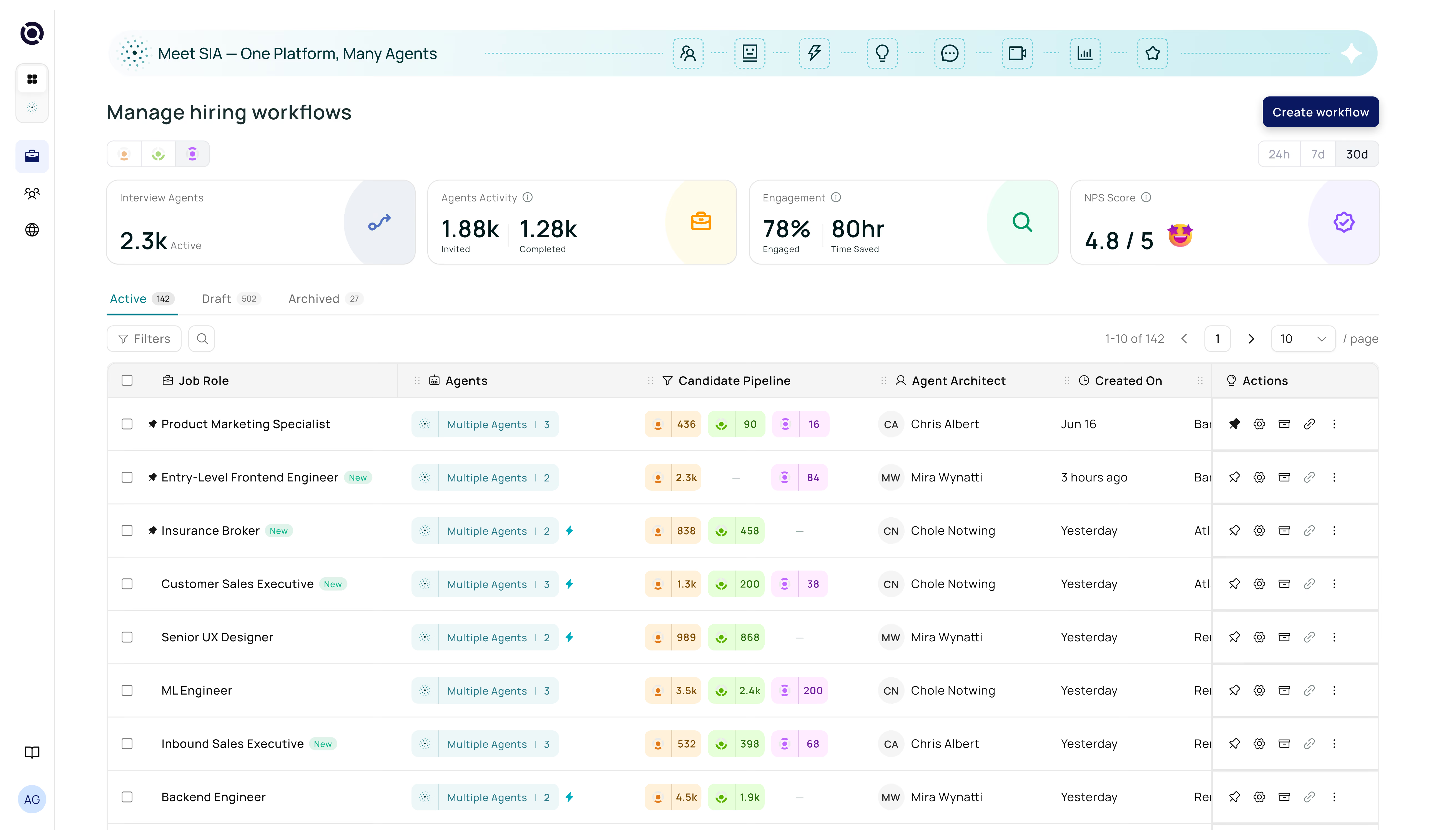
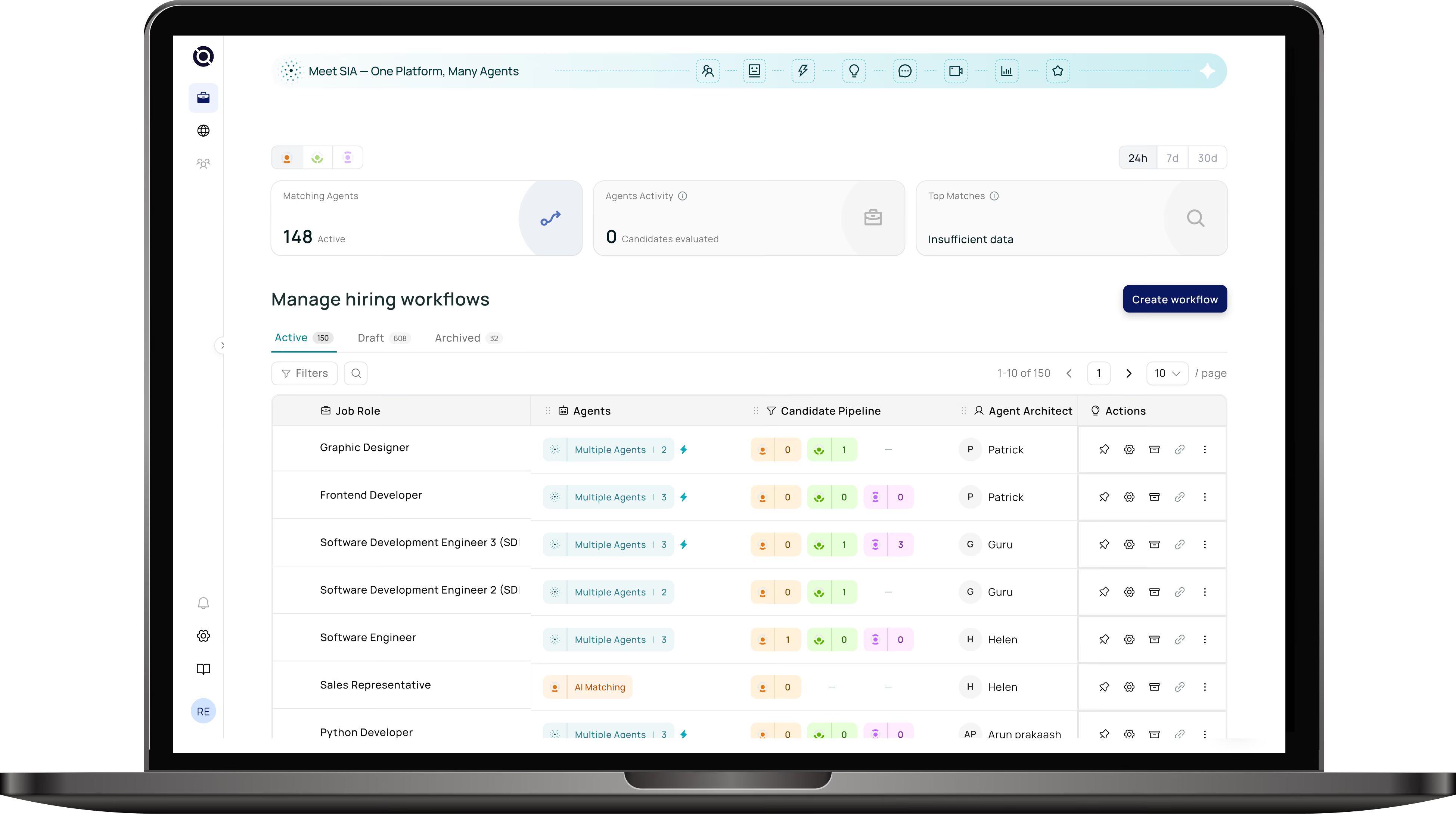
Emerging technologies like agentic AI—autonomous agents that plan, adapt, and execute tasks—are pushing boundaries. Tools like Senseloaf leverage agentic AI to automate sourcing, screening, and interviewing with human-like judgment, consolidating data across your tech stack for frictionless hiring.
3. Key Benefits of Recruitment Process Automation
Implementing recruitment process automation delivers tangible gains. Here's a breakdown:
Time Savings and Efficiency
- Automation reduces time-to-hire by 30-50% (Deloitte, various studies).
- Recruiters save hours on manual screening—up to 23 hours per hire traditionally.
- 85% of employers using AI/automation report increased efficiency (SHRM).
Cost Reductions
- 20-40% lower cost-per-hire with AI screening and scheduling.
- Average savings: 33% in time-to-hire and cost-per-hire.
- Enterprise companies save $2.3M annually.
Improved Quality of Hire
- Better matching leads to higher retention and performance.
- AI tools improve candidate quality by 50% in some metrics.
Enhanced Candidate Experience
- Faster responses and personalized interactions reduce drop-offs.
- Automated communication keeps candidates engaged.
4. How to Calculate Recruitment Automation ROI: A Step-by-Step Framework
Measuring recruitment automation ROI requires a clear formula. The basic one is:
ROI = (Value Generated − Total Costs) / Total Costs × 100
Step 1: Identify Costs
Include direct and indirect expenses:
- Software subscriptions and implementation.
- Training and change management.
- Integration with existing ATS/HCM.
Step 2: Quantify Value Generated
Focus on hard metrics:
- Time-to-Hire Reduction: Multiply saved hours by recruiter hourly rate.
- Cost-per-Hire Savings: Track pre- and post-automation.
- Quality of Hire: Measure via performance ratings, retention (e.g., first-year retention up 20-30%).
- Productivity Gains: Hours freed for strategic work.
Annual cost of automation tool: $50,000
Savings: 40% reduction in time-to-hire ($200,000 saved) + improved hires ($150,000 in retained value)
ROI = ($350,000 − $50,000) / $50,000 × 100 = 600%
For precision, track these 10 key metrics:
- Time-to-Hire
- Cost-per-Hire
- Offer Acceptance Rate
- Quality of Hire
- Source of Hire
- Candidate Experience Score
- Recruiter Productivity (hires per recruiter)
- Retention Rate
- Diversity Metrics
- Application Completion Rate
5. Pros and Cons of Automated Recruiting
- Scales high-volume hiring effortlessly.
- Reduces unconscious bias with standardized screening.
- Frees recruiters for high-touch activities.
- Initial setup costs and learning curve.
- Risk of over-reliance if not monitored.
- Potential to overlook nuanced candidate potential without human oversight.
Myth vs. Fact
Automation replaces recruiters.
It promotes them to strategic roles (Forbes).
AI increases bias.
Properly trained tools reduce it by 25-50%.
6. Before-and-After Scenarios: Real-World Examples
Before Automation
A mid-sized tech firm spent 60 days on average to fill roles, with recruiters screening 88% unqualified resumes manually. Cost-per-hire exceeded $5,000.
After Implementing AI in Recruiting Automation
Using tools like Senseloaf's agentic AI, they automated screening and engagement. Time-to-hire dropped to 30 days, cost-per-hire fell 35%, and quality improved with better-matched candidates.
Hilton reduced time-to-fill by 90% using AI for checks. Deloitte saw 40% higher candidate satisfaction.
7. Industry Trends and Benchmarks for 2026
By 2026, talent teams are no longer debating whether to invest in AI and automation. The conversation has decisively shifted to how well those investments are actually working.
Automation Is No Longer the Differentiator — Autonomy Is
While automation adoption crossed the tipping point years ago, 2026 marks the transition from task-based automation to agentic AI and LLM-driven workflows. Instead of tools that assist recruiters step-by-step, organizations are increasingly exploring systems that can independently plan, execute, and adapt hiring workflows — from sourcing to screening to interview coordination.
That said, adoption is uneven. Many HR and TA teams are still in early maturity stages, experimenting with pilots rather than running fully autonomous hiring operations. The gap between AI ambition and operational reality remains one of the defining characteristics of 2026.
ROI Expectations Are Sharper — and Less Forgiving
The era of vague “AI transformation” promises is over. In 2026, leadership expects clear, defensible ROI tied to workload reduction, cycle-time compression, and improved hiring quality.
Instead of headline claims like “300–500% ROI,” mature teams are tracking:
- Hours of recruiter effort eliminated per hire
- Reduction in dependency on external agencies
- Faster decision velocity for hiring managers
The most successful teams aren't chasing inflated ROI narratives — they're proving value through predictable, repeatable gains embedded into daily hiring operations.
What HR and TA Leaders Should Benchmark in 2026
Time-to-hire
- For high-volume and repeatable roles, the benchmark is now under 30 days when automation and AI agents are applied effectively.
- For specialized roles, the focus is less on an absolute number and more on measurable compression versus historical baselines.
Cost-per-hire
- A 20–30% reduction remains a realistic and defensible target in 2026.
- Teams achieving this are typically reducing manual coordination, minimizing agency usage, and standardizing early-stage screening with AI-led workflows.
The 2026 Reality Check
AI in hiring is no longer about adding features to an ATS. It's about re-architecting how hiring actually gets done. The organizations pulling ahead in 2026 aren't the ones with the most tools — they're the ones building systems that can think, act, and scale alongside their teams.
8. Myths vs. Facts About Recruitment Automation ROI
ROI is hard to measure.
With dashboards in modern tools, track real-time metrics.
Only large enterprises benefit.
SMBs see proportional gains in efficiency.
9. Unlock the Full Potential of Your Recruitment Automation ROI
Measuring recruitment automation ROI isn't optional—it's essential for data-driven HR leaders in 2025. By automating repetitive tasks with AI in recruiting automation and recruitment process automation, you can achieve 30-50% faster hires, significant cost savings, and superior talent quality. Backed by insights from SHRM, Gartner, and real-world benchmarks, the evidence is clear: organizations embracing automated recruiting outperform those stuck in manual processes.
Start by auditing your current metrics, implementing a robust calculation framework, and exploring advanced solutions like Senseloaf's agentic AI platform. Senseloaf automates sourcing, screening, and interviewing with intelligent agents that learn your hiring instincts, integrate seamlessly with your ATS, and deliver measurable ROI through unified workflows and insights.
Ready to transform your hiring and prove undeniable recruitment automation ROI? Visit Senseloaf.ai today to schedule a demo and see how agentic AI can accelerate your talent acquisition.