.png)



Introduction
The average corporate job posting receives 250+ applications. A recruiter reviewing each one for five minutes would spend over 20 hours — per role, per cycle. That's before interviews, coordination, or any of the actual hiring work.
AI candidate screening solves this by doing the first pass automatically: parsing every resume, evaluating fit against the job requirements, and ranking applicants so recruiters see the strongest candidates first. Not a filtered-out pile — a ranked, reasoned shortlist.
This guide covers how AI powered candidate screening works, how it compares to manual review, and what to look for in a tool. If you're newer to the topic, start with what AI in recruiting actually means before diving in.
What Is AI Candidate Screening?
AI candidate screening is the automated evaluation of job applicants using machine learning and natural language processing. Unlike a basic keyword filter that rejects resumes missing a specific word, AI screening understands what candidates have done — and whether it maps to what you need.
A well-built AI candidate screening tool does four things:
- Parses resumes and structured application data into comparable fields
- Evaluates each candidate against the job requirements — skills, experience depth, role relevance
- Ranks the full applicant pool so recruiters work the strongest candidates first
- Explains why each candidate was ranked — not a black-box score
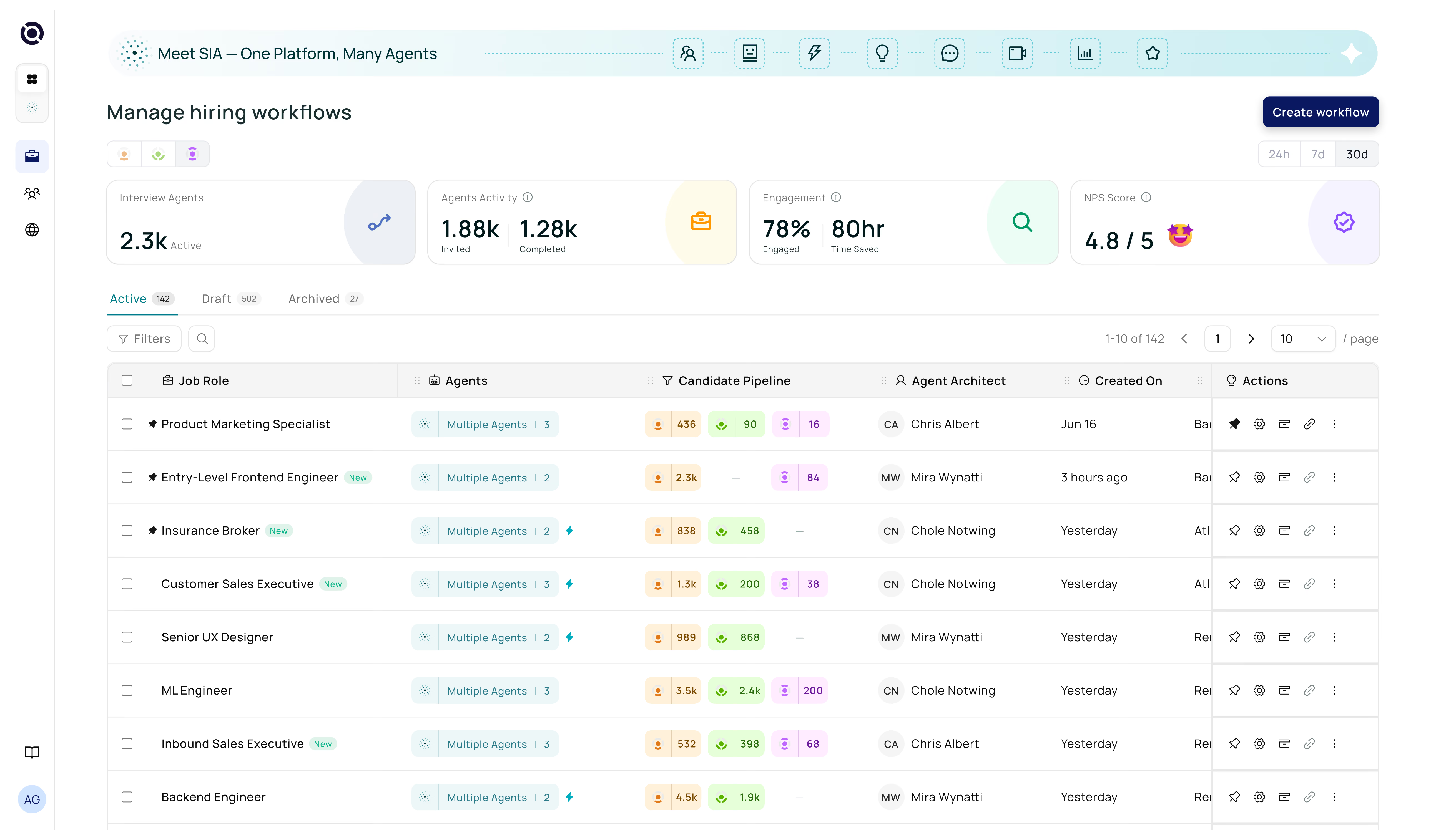
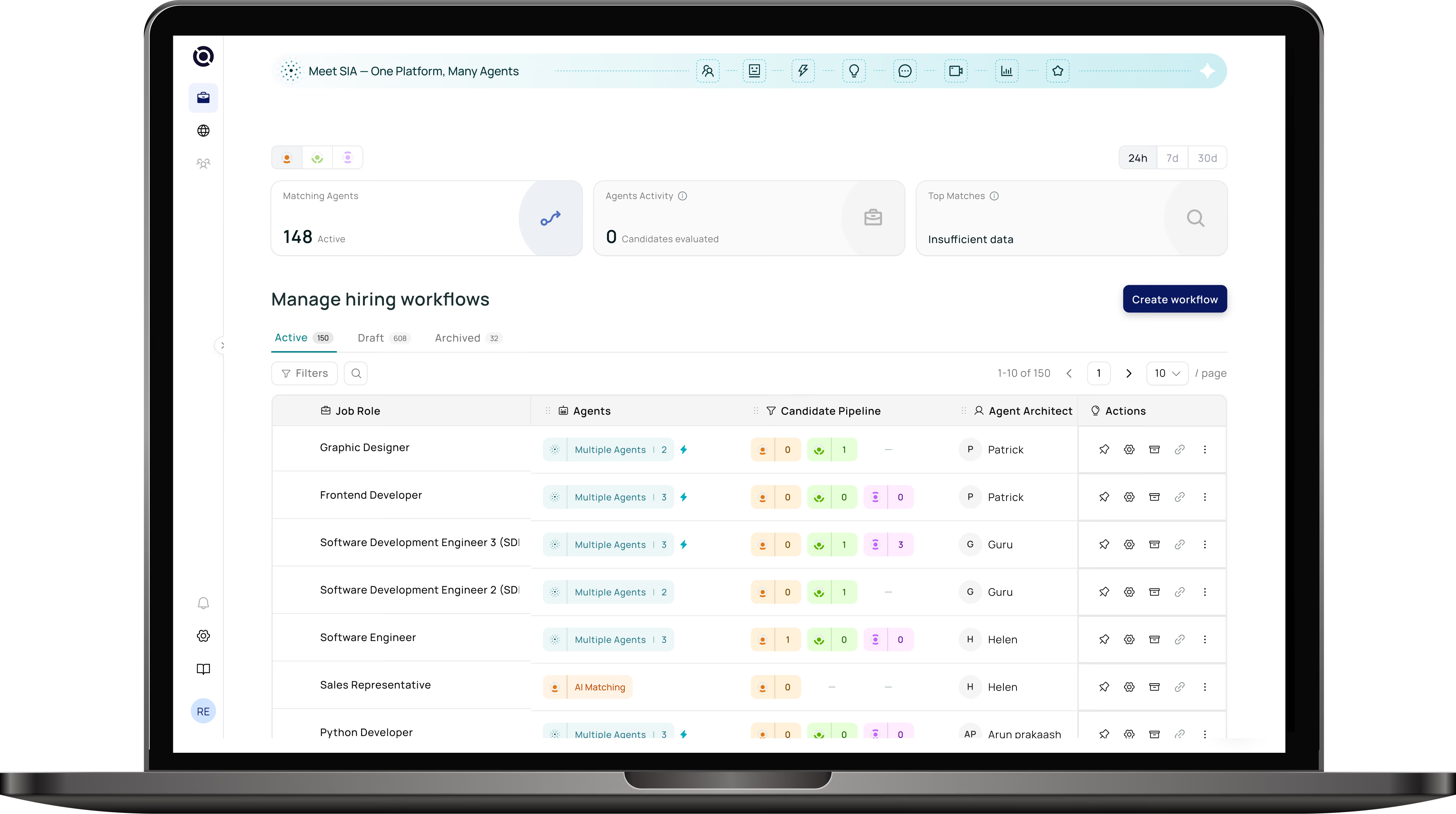
The best systems also go beyond the resume. They can screen candidates through asynchronous voice or text-based prescreens, capturing responses to role-specific questions before a recruiter is ever involved. Senseloaf's AI Prescreening Agent prescreening agent does exactly this — engaging every applicant with a structured, conversational prescreen the moment they apply.
Keyword filtering rejects candidates who didn't use the right words. AI screening understands that a "sales manager" with "ARR growth" experience is relevant to a "revenue lead" role — even with zero keyword overlap. The difference matters enormously at scale.
AI Candidate Screening vs. Manual Review
Manual screening isn't inherently bad — it's just not built for the volume modern hiring requires. Here's how the two approaches compare directly:
| Criteria | Manual Review | AI Candidate Screening |
|---|---|---|
| Speed | 5–10 min per resume | Seconds per applicant |
| Consistency | Varies by reviewer, time of day, fatigue | Same criteria applied to every candidate |
| Bias surface area | High — names, gaps, schools all trigger bias | Lower when properly configured and audited |
| Scale | Breaks down at 50+ applications | Handles thousands simultaneously |
| Candidate experience | Slow response, often ghosted | Instant acknowledgement, faster decisions |
| Explainability | Recruiter can articulate reasoning | Modern AI provides transparent scoring rationale |
| Nuanced judgment | Strong for complex, senior roles | Improving, but still best paired with human review for executive hiring |
The conclusion most teams reach: AI handles volume, humans handle nuance. Use AI recruiting platforms to get from 250 applicants to your top 15 — then let your recruiters do what they're actually good at.
How AI Powered Candidate Screening Works: The 4 Stages
Ingestion & Parsing
Every application — resume PDF, LinkedIn import, manual entry — is parsed into structured data. Name, experience timeline, skills, education, and tenure are extracted and normalised. This is the foundation everything else builds on. Poor parsing means poor screening, which is why choosing the right AI recruiting tool matters far more than most teams realise.
Job Requirement Mapping
The AI maps each candidate's extracted profile against the specific requirements of the open role — not a generic scoring rubric, but the actual job. Skills required vs. skills held. Years of relevant experience. Industry depth. Each dimension gets weighted based on how the role was configured.
Ranking & Shortlisting
The full applicant pool is ranked. Crucially, modern AI candidate screening tools don't just output a number — they surface the reasoning. "Ranked #3: strong SaaS sales background, 6 years direct quota experience, missing enterprise deal size signal." A recruiter can review, agree, override, or investigate in seconds.
Automated Prescreen (Optional but Powerful)
Top-ranked candidates can be automatically engaged in a structured prescreen — via chat, voice, or asynchronous video. This stage replaces the 15-minute phone screen for volume roles and gives recruiters something far more useful than a resume: actual candidate responses to role-relevant questions. This is the core of what AI Prescreening Agent delivers — structured, consistent, instant prescreening at any volume.
AI screening can reduce human bias when well-configured — but poorly designed systems can encode it. Always look for vendors who provide audit trails, configurable criteria weighting, and compliance reporting. NYC Local Law 144 and the EU AI Act both set transparency standards. Make sure your tool meets them.
What to Look for in an AI Candidate Screening Tool
Not all AI candidate screening software is equal. When evaluating options, your checklist should cover:
- Explainable scoring — can you see why each candidate was ranked, not just their score?
- Semantic understanding — does it understand synonyms and equivalent experience, not just exact keywords?
- Prescreen capability — can it engage candidates with structured questions, not just rank resumes?
- ATS integration — does it connect with your existing system or require migration?
- Bias audit trail — does it provide compliance reporting for EEOC, EU AI Act, NYC LL144?
- Configurable criteria — can you weight different requirements per role, not just apply one-size-fits-all logic?
- Candidate experience quality — does the screening feel like a conversation, or like filling out a form?
Common Mistakes When Implementing AI Candidate Screening
Treating It as a Filter, Not a Ranker
The goal of AI powered candidate screening is to surface your best candidates — not eliminate everyone except one perfect match. Configure it to rank and shortlist, not gate. You'll miss strong candidates if your threshold is too aggressive.
Letting It Run Unmonitored
AI screening improves with feedback. When a recruiter overrides a ranking — moving a low-ranked candidate to interview — that signal should feed back into the model. Without a feedback loop, the system never gets better. This is why agentic AI systems that learn from recruiter decisions outperform static rule-based screeners over time.
Screening for the Wrong Things
If your job description is poorly written, your AI screen will be too. Garbage in, garbage out. Invest 20 minutes defining the must-haves vs. nice-to-haves before configuring any screening criteria.
The Bottom Line
AI candidate screening is no longer a competitive advantage — it's becoming table stakes. The teams that implement it well move faster, waste less recruiter time on poor-fit candidates, and deliver a better experience to every applicant because no one gets ghosted when the process runs automatically.
The teams that implement it poorly — with black-box scoring, rigid keyword filters, and no human oversight — create compliance risk and miss great candidates. The difference is in the tool and the configuration, not the technology itself.
Ready to go deeper? Read our guides on AI in talent acquisition and how to choose the right AI recruiting tools for your stack. Or if you want to understand the full landscape, the complete AI recruitment guide covers every stage from sourcing to hire.