.png)



Introduction
The first screening call has always been a bottleneck. It takes time to schedule, time to conduct, and time to document — multiplied across hundreds of applicants per role. Now, how AI voice agents are transforming recruitment processes is no longer a theoretical question. It's a shift that's already happening across talent teams at scale.
According to Gartner, 82% of HR leaders plan to use some form of agentic AI within their functions by mid-2026 — and AI agents in recruitment represent one of the most practical entry points. They engage candidates instantly, conduct structured voice or text-based screening conversations, score responses in real time, and hand off a ranked shortlist to recruiters — all without a single calendar invite.
Here's what the shift actually looks like on the ground.
What AI Voice Agents Actually Do in Hiring
An AI voice agent in recruitment is more than a bot reading from a script. It's a system capable of conducting a real, structured conversation with a candidate — via voice call, SMS, or chat — asking role-specific questions, understanding responses in natural language, applying scoring logic, and flagging disqualifiers without human involvement.
Unlike a static form or a chatbot FAQ, a voice agent adapts. It follows up on vague answers, handles candidate questions about the role, and maintains a professional, consistent tone across every single interaction — whether it's the first applicant of the day or the five hundredth.
The traditional phone screen was designed for a world where recruiters had time to manually review and call every promising application. In a hiring environment where a single job post can generate hundreds of applicants within 48 hours, that model breaks down. AI agents in recruitment solve for this — delivering structured, consistent, scored interactions at a scale no human team can match.
Five Ways They're Transforming Recruitment Processes
- Instant Candidate Engagement, Any Time. AI voice agents reach out the moment a candidate applies — not when a recruiter is available. That immediacy matters: candidates who receive a prompt, structured first touchpoint are significantly more likely to complete the process. Gartner notes that 60% of candidates abandon applications due to lengthy or complex processes. Speed of first contact is one of the highest-leverage variables a recruiting team can control.
- Structured Screening at Scale. Every candidate gets the same role-specific questions, scored against the same criteria. There's no variation based on which recruiter is handling the call, what time of day it is, or how many calls have already happened that week. HBR research found that structured, AI-supported interviews produce 24–30% higher assessment consistency — a direct improvement in both fairness and hire quality.
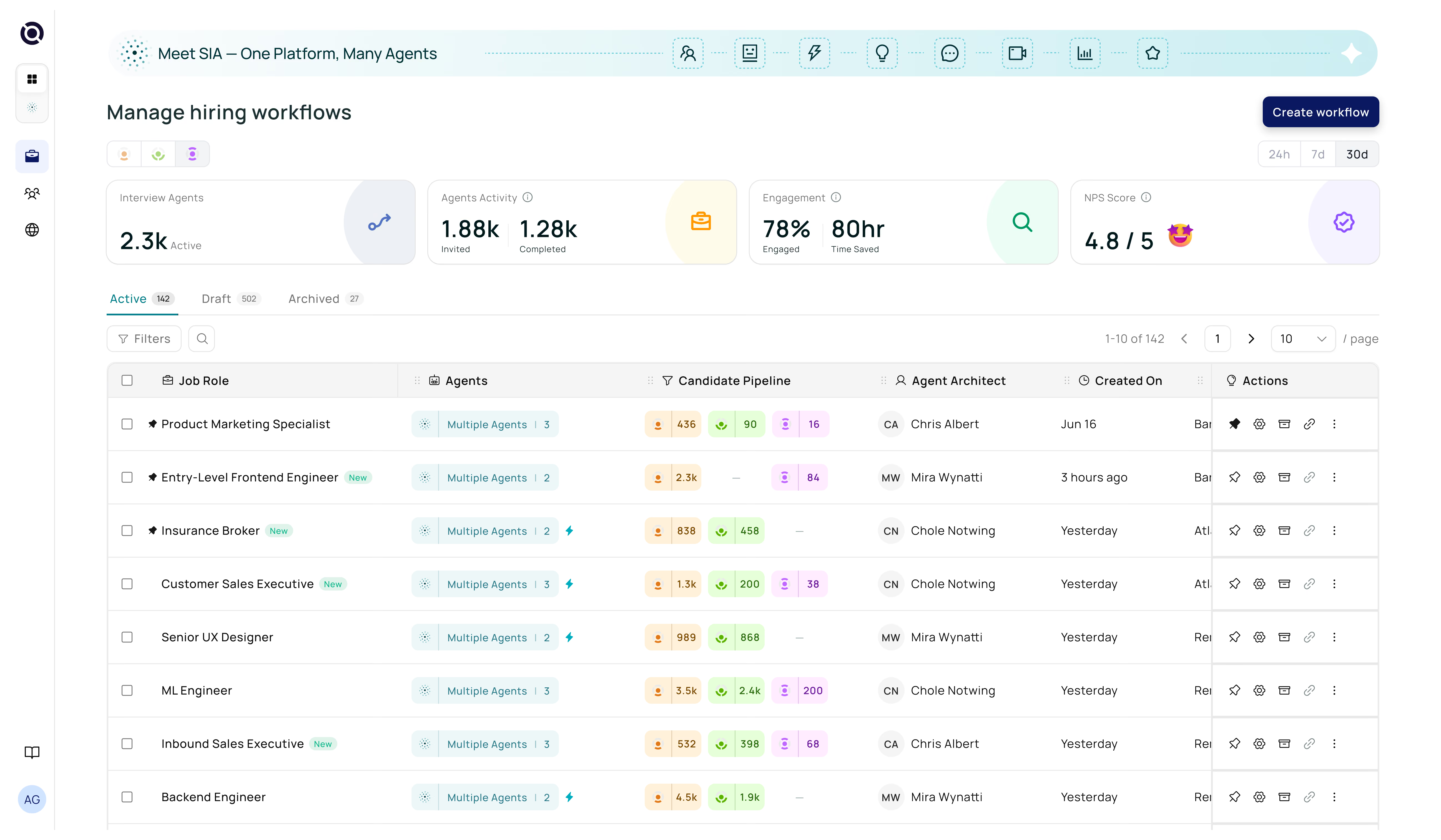
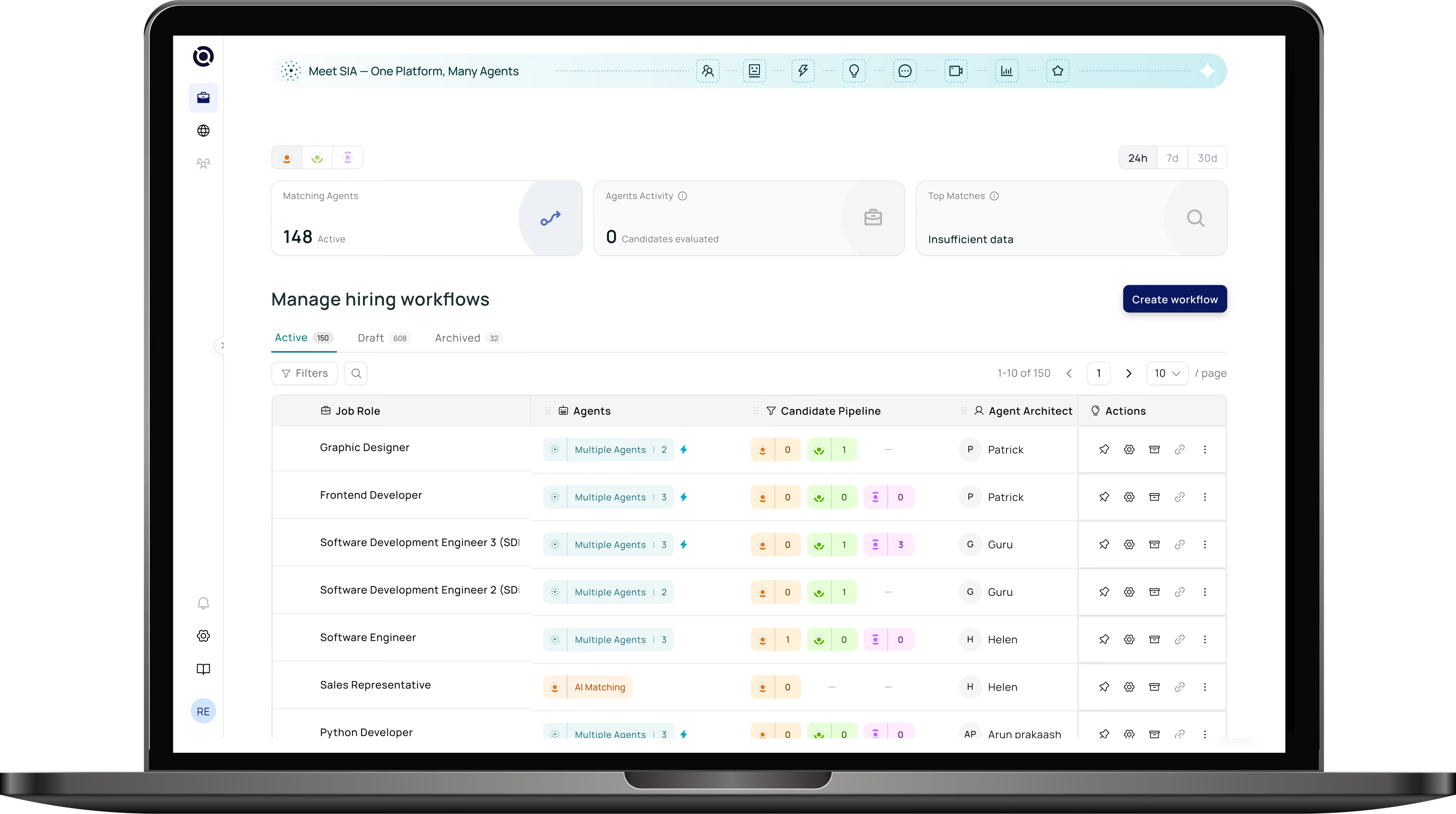
- Ranked Shortlists, Not Raw Piles. Instead of handing recruiters a stack of applications to manually review, top AI recruiter agents produce scored, ranked shortlists the moment screening closes. Recruiters walk into their day knowing who to call first — not spending the morning figuring it out.
- Pipeline Visibility That Didn't Exist Before. Every voice agent conversation generates structured data: who engaged, who dropped off, which questions caused confusion, where the pipeline is thinning. SHRM's 2025 data shows that 24% of organisations using AI in recruiting say it has measurably improved their ability to identify top candidates — not just screen faster, but screen smarter.
- Seamless ATS Integration. The best AI agents in recruitment don't operate as a separate tool — they write scores, summaries, and candidate responses directly back to the ATS. Recruiters see everything in the system they already use, with no manual data entry, no disconnected workflows, and no risk of information falling between the cracks.
AI Voice Agents vs. Traditional Screening
| Dimension | Traditional Phone Screening | AI Voice Agent |
|---|---|---|
| Speed of first contact | Hours to days post-application | Immediate — triggered on application |
| Availability | Business hours only | 24/7 — candidates engage on their schedule |
| Evaluation consistency | Varies by recruiter and workload | 100% consistent criteria for every candidate |
| Shortlist creation | Manual review after all calls complete | Scored, ranked profiles available same day |
| Capacity | Limited by recruiter headcount and hours | Handles thousands of simultaneous conversations |
| Data output | Recruiter notes, variable quality | Structured summaries synced directly to ATS |
The practical implication: recruiting teams using top AI recruiter agents aren't just moving faster — they're operating with fundamentally more information, more consistency, and less manual overhead at every step of the early-stage funnel.
Where Humans Stay in the Loop
Gartner's guidance here is direct: there is such a thing as too much efficiency. Talent acquisition leaders are advised to define guardrails for AI agents upfront and monitor for deviations — because the value of automation lies in freeing human recruiters for the work that genuinely requires human judgment, not in removing humans from the process entirely.
AI voice agents are built for the early funnel: high-volume, structured, repeatable interactions where speed and consistency produce the best outcomes. What they hand off to human recruiters is a better-prepared, better-screened candidate pool — so that the conversations that require empathy, negotiation, and relationship-building get the attention they deserve.
By 2030, Gartner predicts 50% of current HR activities will be AI-automated or performed by AI agents. The organisations best positioned for that future are those starting now — not by replacing their recruiting teams, but by redesigning how those teams spend their time. Exploring the full landscape of top AI recruiter agents and their implementation patterns is the right place to begin that redesign.